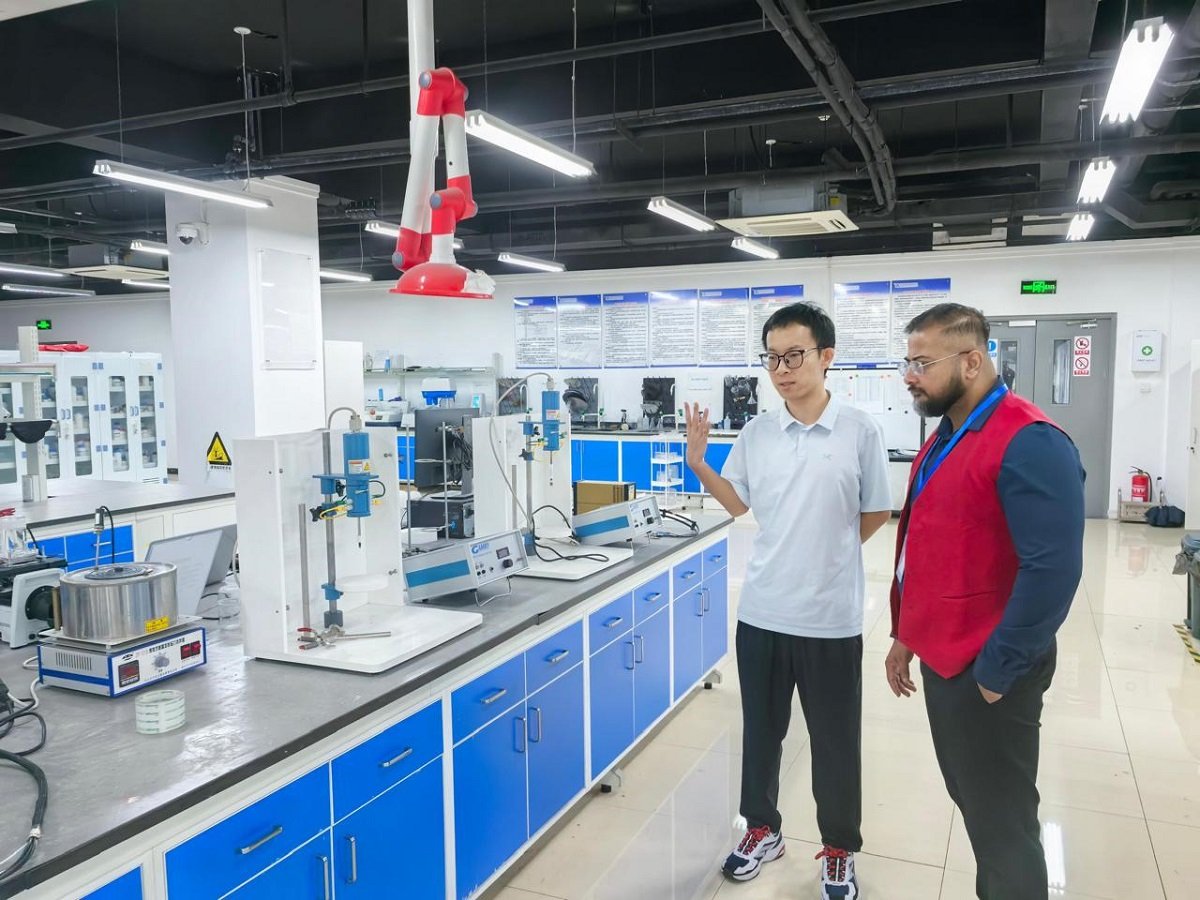
Researchers from Nagaland University and the University of Science and Technology, Beijing, have developed carbon quantum dots (ACDs) from discarded apple leaves, providing an eco-friendly solution to metal corrosion, a significant industrial challenge. This innovative research, led by Prof. Ambrish Singh and Prof. Yujie Qiang, shows ACDs can effectively inhibit copper corrosion in acidic environments, achieving an inhibition efficiency of 94.0% at low concentrations and improving to 96.2% with extended exposure. Published in the Journal of Alloys and Compounds, the study presents a sustainable alternative to traditional, toxic corrosion inhibitors commonly used in infrastructure and manufacturing.
Prof. Jagadish Kumar Patnaik praised the collaboration for addressing real-world issues and promoting sustainable science. The work also emphasizes waste-to-wealth strategies, turning agricultural waste into valuable nanomaterials, thereby enhancing circular economy prospects for farming communities. Prof. Singh highlighted the broad applications of this research across industries like oil and gas, chemical processing, and wastewater treatment, where corrosion poses financial and safety challenges. Biomass-derived inhibitors like apple-leaf ACDs could prolong the lifespan of industrial equipment while minimizing the environmental and health risks associated with conventional chemicals.
Furthermore, Prof. Qiang explained the green hydrothermal process utilized to create nanoscale carbon particles enriched with sulfur and nitrogen, which adhere effectively to metal surfaces. Electrochemical testing showed that ACDs form a robust protective film on copper that impedes corrosive ion transfer, with theoretical modeling identifying nitrogen groups as crucial to the adhesion of this protective layer. Future steps include moving from laboratory testing to pilot-scale applications, integrating the findings with existing protective coatings for practical use.