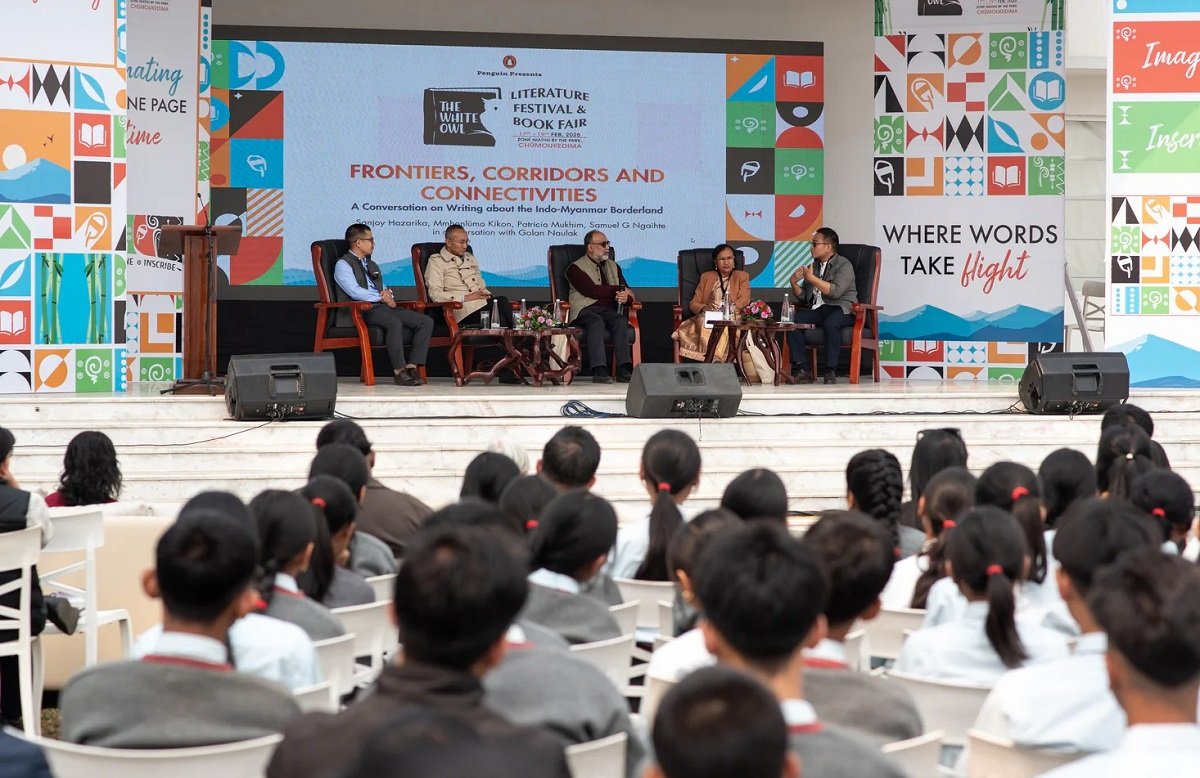
The third edition of the White Owl Literature Festival and Book Fair 2026 began on February 5 at Town Hall, Zone Niathu by The Park in Chümoukedima, bringing together writers, readers, journalists, artists and literature enthusiasts from different parts of India and abroad. The three-day festival is being organised by Penguin Random House India in collaboration with The White Owl under the theme “Celebrating Stories, Inspiring Minds.”
Speaker of the Nagaland Legislative Assembly, Sharingain Longkumer, attended the inaugural session as the chief guest and stressed the importance of reading in shaping individuals and society. Addressing the gathering, he said that what people read eventually influences the way they think, speak and live. He urged parents, teachers and society to encourage children to develop reading habits at an early age and reduce their exposure to mobile phones and digital distractions. He said building a reading culture is necessary for nurturing thoughtful and informed citizens.
Longkumer also appreciated the efforts of the organisers and the festival’s founder, expressing hope that the initiative would continue to expand and reach more districts and communities across Nagaland and beyond. He said such platforms give people from Nagaland, the rest of India and other countries an opportunity to share their stories, exchange ideas and learn from one another. According to him, literary gatherings play an important role in inspiring young minds and strengthening cultural understanding through storytelling.
Delivering the keynote address, Press Club of India president Sangeeta Barooah Pisharoty spoke about the origin and purpose of the festival. She said the festival was started with the idea of celebrating literature in a region that is often geographically distant from major literary centres, while also connecting local readers with national and regional authors. She noted that over the years, the festival has gradually created a space where different literary voices can be heard and appreciated.
Pisharoty said the festival has helped build a growing literary community in the Northeast, a region that is often known mainly for conflict-related news. She added that such events highlight the rich cultural traditions, oral histories and creative expressions of the region. According to her, literature festivals not only support cultural and intellectual growth but also contribute to the local economy by attracting visitors and promoting local crafts, culture and businesses.
She further highlighted the importance of translation and English writing in bringing regional literature to wider audiences. Platforms like the White Owl Literature Festival, she said, can help writers from the region reach national and global readers, making their works accessible to younger generations and encouraging reading habits among youth. She also encouraged journalists to document the history, experiences and social realities of the region through non-fiction writing so that important stories are preserved for future generations.
Festival director Viketuno Rio said books provide individuals with personal experiences and quiet reflection, while literary festivals create public spaces where people can meet authors, discuss ideas and discover new voices. She said the White Owl Literature Festival aims to promote reading culture, empathy, self-reflection and critical thinking, while also continuing to evolve by listening to feedback from readers and participants.
Rio noted that this year’s edition includes participation from authors, artists and cultural representatives from different parts of India and abroad, including delegates from Japan. She also highlighted the festival’s social outreach initiatives, mentioning the “Run for Persons with Disabilities” organised on January 31 as part of the festival’s activities. The event, she said, aimed to promote inclusion and encourage communities to think about how they can create more supportive environments for persons with disabilities.
Encouraging participants to actively engage with the festival, she urged readers and visitors to read deeply, listen carefully and carry back new ideas, empathy and respect for different perspectives. She said literature festivals are not only about books but also about conversations, understanding and building connections among people from different backgrounds.