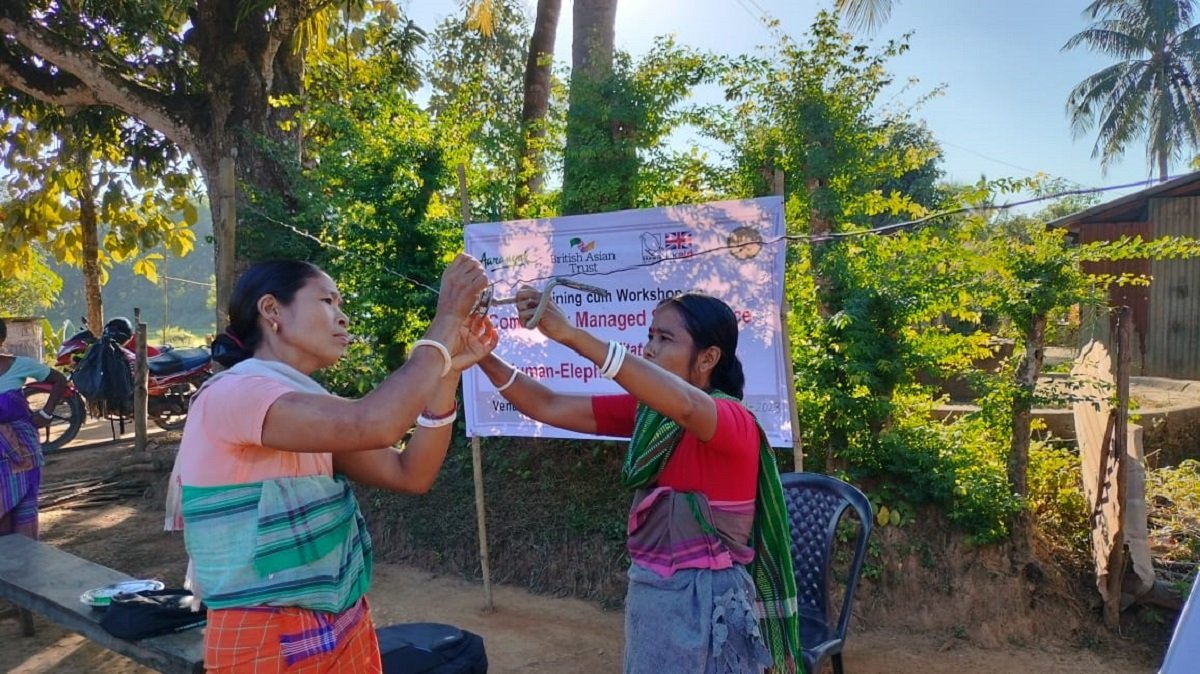
In the villages of eastern Assam and the Garo Hills region of Meghalaya, crop raids by wild elephants have long posed a major threat to farmers, often pushing vulnerable families deeper into poverty. Over the past two years, however, local communities have demonstrated that peaceful coexistence with elephants is possible through collective action, traditional knowledge, and practical conservation measures.
Working across Majuli, Tinsukia, Sibsagar, Jorhat and West Garo Hills, conservation organisation Aaranyak collaborated with local residents to install and manage seasonal solar-powered fences aimed at preventing elephant raids on crops and damage to property.
Unlike permanent barriers, these community-oriented fences are activated during the evenings in crop-growing seasons and dismantled after harvest when they are no longer required. The initiative has emerged as an effective and flexible model for reducing human-elephant conflict in rural areas.
As part of the programme, 345 community members were trained in the installation and maintenance of solar-powered fencing systems through a standardised training module. Women played a significant role in the initiative, particularly in West Garo Hills, where nearly half of the participants were women.
To strengthen community ownership, 24 Village Fence Committees comprising 457 members were formed to oversee the maintenance and management of the fencing systems.
At present, 19 community-managed solar fences covering more than 80 kilometres are protecting nearly 12,989 bighas, or around 4,286 acres, of agricultural land across these regions. The protected farmland is estimated to safeguard crops worth nearly Rs 11.7 crore.
According to the organisers, 3,236 households living within the protected zones reported zero crop loss from elephant raids during the last two years.
The initiative highlights how conservation efforts can go beyond wildlife protection by also securing livelihoods, empowering local communities, and promoting long-term coexistence between humans and elephants.
The organisation stated that the success of the seasonal solar-fencing model was made possible because of active public participation, shared responsibility, and strong community ownership. It emphasised that conservation measures can only become sustainable when local people feel they are part of the process and not merely subjects of intervention.