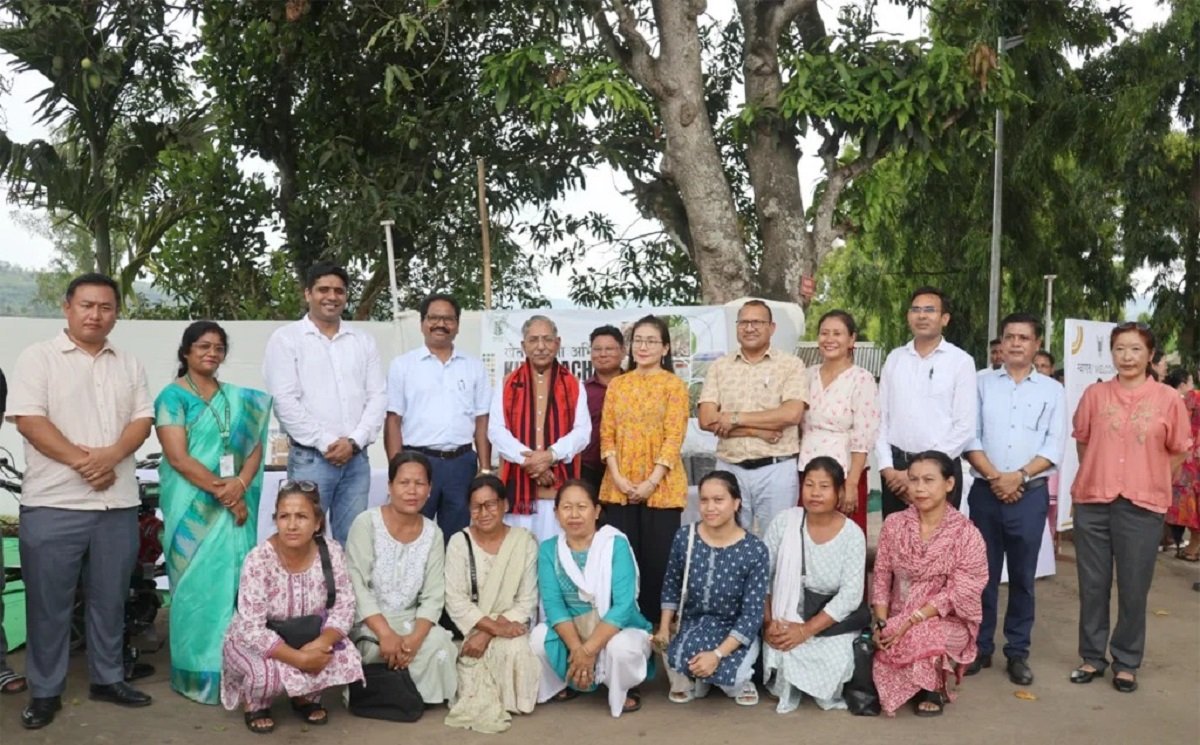
Nagaland Governor Nand Kishore Yadav on Friday visited the Indian Council of Agricultural Research (ICAR) Research Complex for North Eastern Hill Region, Nagaland Centre, at Medziphema and reviewed its ongoing research activities, technology transfer programmes and contributions to the development of agriculture in the state.
During the visit, officials of the centre presented a detailed overview of its work across various sectors, including crop improvement, integrated farming systems, horticulture, agroforestry, livestock development, fisheries, water conservation and climate-resilient agriculture. The governor was also briefed on research projects, technology demonstrations, farmer outreach efforts and capacity-building programmes being implemented in different parts of Nagaland.
The presentation highlighted several achievements of the research centre, including the development of drought-tolerant rice varieties, promotion of high-yielding crop cultivars and the introduction of integrated farming models designed to support small and marginal farmers. Officials also showcased initiatives related to rainwater harvesting, improved cultivation practices for Naga King Chilli, horticultural value addition and advancements in pig and poultry production.
Scientists informed the governor about ongoing efforts in artificial insemination in pigs, conservation of indigenous livestock resources and the distribution of improved germplasm to farmers across the Northeastern region. They highlighted how these initiatives are helping improve productivity, strengthen rural livelihoods and promote sustainable agricultural practices.
Yadav appreciated the role of agricultural research institutions in supporting farmers and strengthening food security. He noted the importance of adopting scientific methods and innovative technologies to address challenges faced by the agriculture sector, particularly in hilly and climate-sensitive regions.
As part of the visit, the governor toured the centre’s experimental fields, nurseries, laboratories, livestock units, fisheries facilities and processing units. He interacted with scientists, researchers and staff members, gaining first-hand insight into the work being carried out to improve agricultural productivity and sustainability in the state.