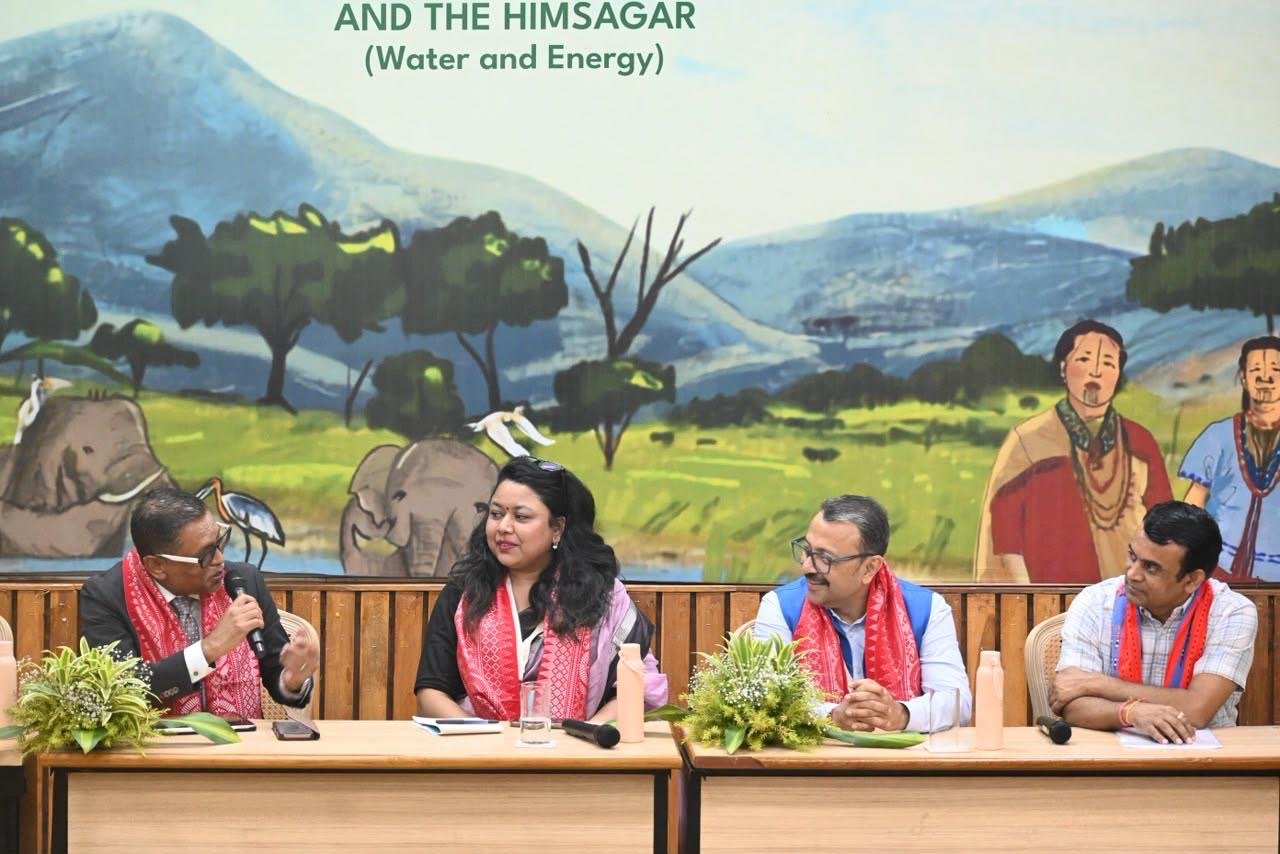
The 14th Eastern Himalayan Naturenomics™️ Forum (EHNF) 2026, organised by Balipara Foundation in collaboration with the Indian Institute of Technology Guwahati (IIT Guwahati), brought together policymakers, industry leaders, scientists, researchers, academics and sustainability practitioners to deliberate on the interconnected futures of energy security, water conservation and ecological resilience in the Eastern Himalaya.
Held under the overarching theme “The Future of the Third Pole and Himsagar (Eastern Himalaya)”, the discussions explored renewable energy, hydropower, electricity affordability, cleaner transportation, biomass and biochar, river health, climate resilience and integrated basin-level governance.
The programme featured distinguished speakers including Prof. Devendra Jalihal, Director, IIT Guwahati; Shri Subramanian Ramadorai, Chairman, Karmayogi Bharat; Jishnu Barua, Chairman, Central Electricity Regulatory Commission (CERC); Tim McIntosh, Corporate Vice President and TSAT Business Head, Tata Electronics; and Prof. Joyashree Roy, Distinguished Professor, Asian Institute of Technology, Thailand.
The Energy sessions examined how Northeast India can advance its renewable energy potential while balancing economic growth, affordability, energy security and ecological sustainability. Highlighting the growing importance of the sector in driving technological advancements, Himal Tewari, Chief CSR and Sustainability, Tata Power, observed, “I think the energy ecosystem is at the forefront of what innovation is happening globally. So today, if you see what digital was 10 years back, energy is today at the front and centre and at the cutting edge of innovation.”
The discussions also examined the investment conditions required to accelerate the energy transition. Abhishek Chatterjee, Vice President, Regulatory & Power Sales, JSW Energy, emphasised, “Successful energy investment requires equitable risk-sharing, viable projects, reliable networks, credible offtakers and predictable regulation—not a preference for any single technology or delivery model.” Echoing the need for a diversified approach to meet India’s growing energy requirements, Bhaskar Jyoti Phukan, Managing Director, Numaligarh Refinery Limited (NRL), noted, “Development demands greater energy consumption, and its sustainable future lies in harnessing a diverse mix of energy sources.”
The sessions also brought together perspectives from Oil India, Numaligarh Refinery Limited, Tata Power Renewable Microgrid, JSW Energy, NETRA, IIT Bombay and Kyushu University, Japan, exploring technology, investment and partnerships for a diversified and resilient energy transition.
The Water sessions followed a source-to-downstream approach, examining the journey of water from Himalayan glaciers, springs and headwaters to the rivers, wetlands and floodplains that sustain communities across the Eastern Himalaya. Discussions addressed climate change, floods, riverbank erosion, pollution, biodiversity and community-led water governance. Drawing attention to the growing water crisis, Dr. Indira Khurana, Chairperson, India Himalayan River Basin Council (IHRBC), cautioned, “We have moved from water scarcity to water bankruptcy. Even as our rivers and groundwater dry up, the Eastern Himalayas remain rich in biodiversity and traditional wisdom. Our development must build on these strengths to be truly sustainable and regenerative.”
The importance of understanding water systems was further linked to disaster preparedness and climate resilience. Prof. Hemanta Hazarika, Graduate School of Engineering, Kyushu University, Japan, highlighted the need to combine scientific research with community-based early warning mechanisms, stating, “Disaster resilience begins with understanding water. Extreme rainfall, changing precipitation patterns and rising soil moisture can trigger landslides and slope failures. By combining scientific understanding, slope monitoring and community-based early warning systems, we can move from disaster response to disaster preparedness and build a more resilient society.”
The Forum encouraged youth participation through the Naturenomics Pitch Your Idea research presentations. The Naturenomics Exhibits Showcase featured sustainable products and innovations from Tata Power, Deroi Tea, Pinappl, Orelian Earth, House of Mitenga and Bam Fiber.
The deliberations reinforced a shared understanding that energy security, water security and ecological security are inseparable. Building a resilient Eastern Himalaya will require stronger institutional collaboration, scientific innovation, responsible infrastructure development and community-centred solutions that place ecological integrity at the heart of regional progress.
From Water Scarcity to Water Bankruptcy: Experts Warn at Eastern Himalayan Forum in IIT Guwahati