Rare centuries-old manuscripts rescued from the devastating floods that hit Upper Assam earlier this year are now on public display at Oitijya, the heritage festival being hosted by the Assam State Museum, following an extensive restoration effort spanning more than four months.
Retrieved from Satras, private collections and households inundated during the July floods, many of the manuscripts had suffered severe damage and were at risk of being lost forever. Thanks to the meticulous work of the museum’s conservation laboratory, dozens of these priceless documents have been stabilised and restored, allowing visitors to witness an important part of Assam’s literary and cultural heritage.
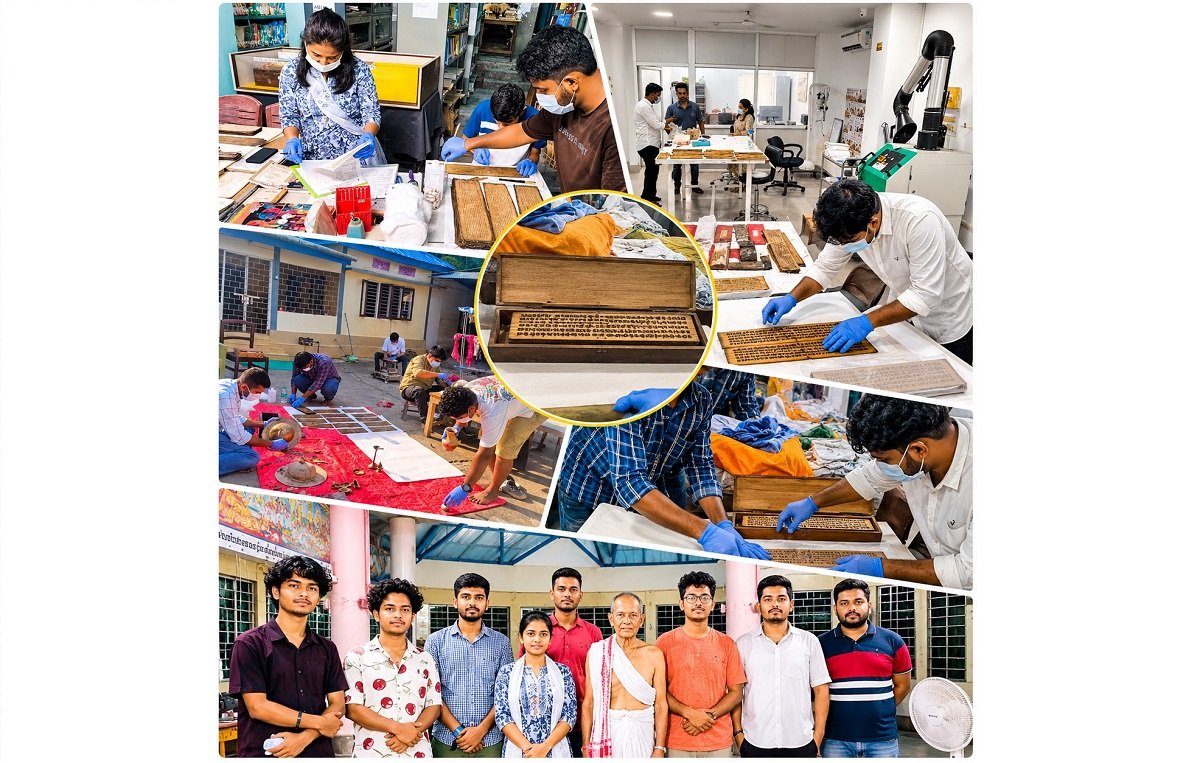
Soon after floodwaters receded, the museum’s conservation team travelled across affected areas to salvage manuscripts and assess the extent of damage. While some could be treated on-site, 56 of the most severely affected manuscripts were transported to the museum’s laboratory in Guwahati for specialised conservation.
The restoration process was painstaking. Prolonged exposure to moisture had caused pages to stick together, while many manuscripts had torn sections, distorted surfaces and deteriorating ink. Conservators worked carefully to separate pages, dry the documents, repair damaged surfaces and prevent further deterioration.
Led by laboratory chemist Antareen Talukdar, the team spent months bringing the fragile manuscripts back to a condition suitable for handling and exhibition. The restored documents are now being prepared for return to their owners in specially designed protective packaging.
Among the visitors to the exhibition was Bengaluru-based journalist Puja Jain, who praised the restoration work and noted that many of the manuscripts appeared almost new despite the damage they had sustained.
Explaining the process, laboratory assistant Bikash Das said absorbent conservation papers were used to remove moisture before damaged and wrinkled sections were repaired. Every effort was made to retain the original material and character of each manuscript, he added.
The collection also sheds light on the development of Assamese language and script over the centuries. Intern Ritik Jyoti Borah pointed out that the manuscripts contain examples of ancient scripts such as Garhgaya, Kaitheli and Bamuniya, all of which form an important part of Assam’s literary legacy.
Visitors to Oitijya are also getting a behind-the-scenes look at manuscript conservation. Interns Kalyani Borah and Priti Rathi are guiding guests through displays featuring the specialised tools and techniques used in the preservation process, helping them understand the science and skill involved in safeguarding historical records.
The conservation team acknowledged the support and encouragement of museum director Sujata Suchibrata, whose emphasis on heritage preservation helped drive the initiative forward.
For the restored manuscripts, their appearance at the exhibition marks more than a successful conservation exercise. It represents a determined effort to preserve Assam’s rich literary, linguistic and cultural heritage and ensure that these fragile historical records remain accessible to future generations.