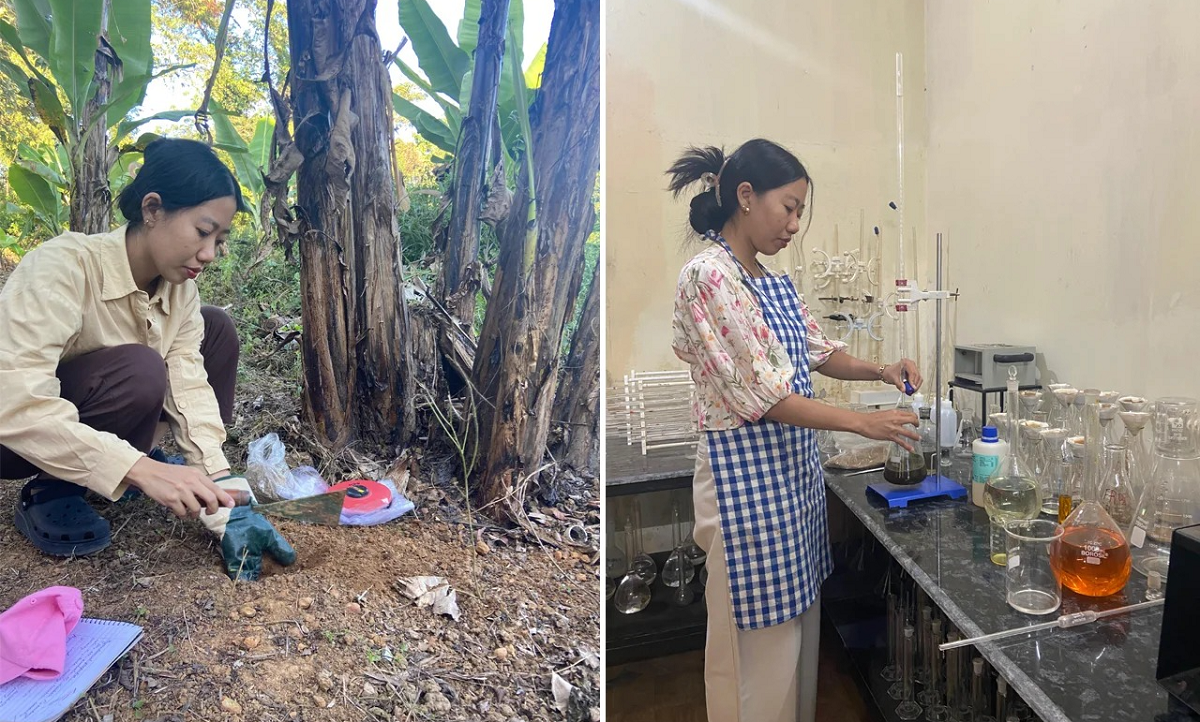
A multi-institutional research team led by Nagaland University has sounded the alarm over rapidly deteriorating soil health in the Dhansiripar region, revealing strongly acidic soils, declining structural stability, and sharp variations in nutrient availability across six villages. The study—conducted across Amaluma, Dhansirpar, Doyapur, Kiyeto, Melongmen and Razhaphe—shows that expanding agriculture, urbanisation and conversion of forest land are severely affecting soil properties such as pH, organic carbon, porosity, water-holding capacity and macronutrient levels. The findings, published in the international journal Environmental Monitoring and Assessment, highlight urgent concerns about declining fertility and rising erosion risks.
Nagaland University Vice-Chancellor Prof. Jagadish K. Patnaik said the results underscore the immediate need for sustainable land management. “These soils are degrading fast. Without timely intervention, agricultural productivity and environmental health will continue to decline,” he said. Co-author Prof. Manoj Dutta noted that the study compared multiple land-use systems—paddy fields, orchards, cultivated plots and forests—using advanced analytical tools to understand degradation patterns. Prof. Tanmoy Karak added that lowland paddy areas showed the greatest structural instability. Researchers documented soil acidity levels between pH 4.9 and 5.9 and organic carbon content ranging from 0.45% to 3.69%, indicating substantial variation and widespread vulnerability.
PhD scholar Reshinaro Tzudir said the findings should serve as a wake-up call. “Soil in these areas is extremely susceptible to erosion and fertility loss. Sustainable strategies are urgently needed,” she said. The project involved scientists from ICAR-IASRI, University of California San Francisco, Dibrugarh University, Tocklai Tea Research Institute and Diphu Medical College. The team plans long-term monitoring, community engagement, and collaboration with policymakers to promote evidence-based land-use planning and soil conservation.