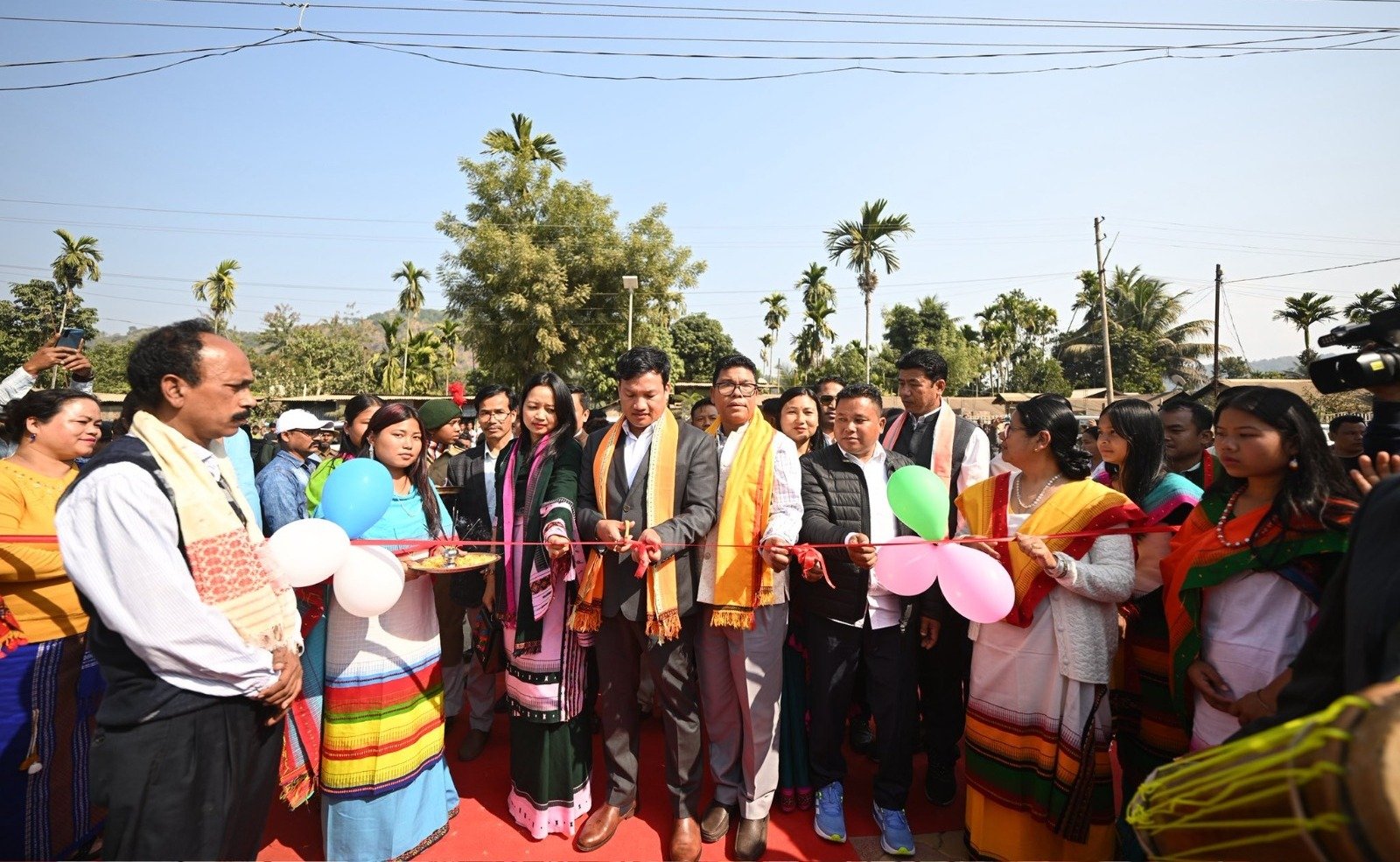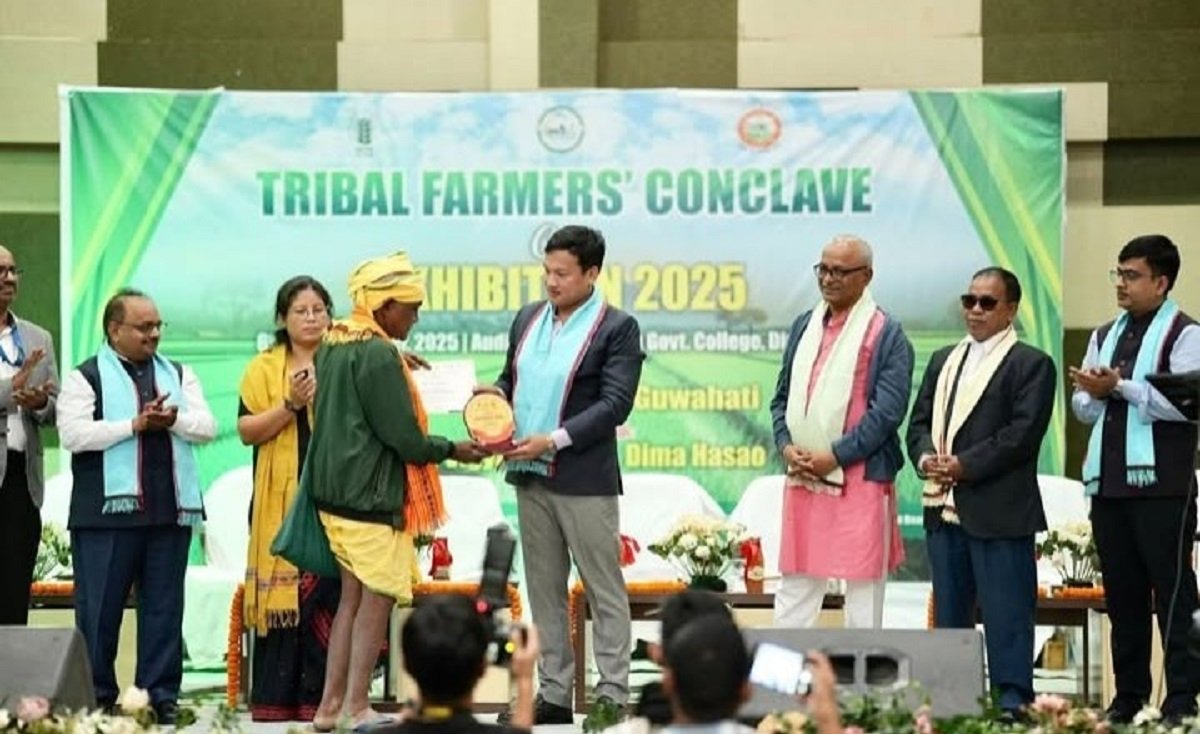
The two-day Tribal Farmers’ Conclave-cum-Exhibition 2025 was opened at the Haflong Government College Auditorium Hall by Debolal Gorlosa, Chief Executive Member (CEM) of the North Cachar Hills Autonomous Council (NCHAC), in an important effort to empower tribal farmers and improve the agricultural sector. The Krishi Vigyan Kendra (KVK), Dima Hasao, and the ICAR-Agricultural Technology Application Research Institute (ATARI), Zone VI, Guwahati, are working together to host the event. The colloquium encourages tribal farmers from all across Assam to embrace contemporary methods and look into market-oriented farming potential by providing an essential venue for agricultural innovation, entrepreneurship, and value addition.
During the two-day session, participants from different districts are displaying their inventions, products, and success stories. CEM Debolal Gorlosa emphasized in his inaugural speech the significance of empowering local farmers through technical interventions, value addition, and processing, which can greatly increase their income and strengthen the rural economy. He praised ICAR’s and KVK Dima Hasao’s efforts to unite grassroots experience and scientific knowledge on a single platform. Award presentations honoring the top-performing farmers, business owners, and innovators were also a part of the first event, recognizing their exceptional contributions to rural development and tribal agriculture.
Nandita Gorlosa, Hon’ble Minister of Assam, Dima Hasao District BJP President & Autonomous Council Member Dhriti Thaosen, NCHAC Executive Members, Donpainon Thaosen, Monjit Naiding, Probita Johori, Niranjan Hojai, and other Autonomous Council members, including Projith Hojai, Hirojit Jidung, and John Phoitong, graced the program. Dr. G. Kadirvel, Director of ICAR-ATARI, Zone VI; Dr. Girish Patel, Director of ICAR-NRC on Mithun, Nagaland; Somendra Longmailai, Chief Trustee, Keshav Smarak Nyas; Ullas Kulkarni, Kshetra Pracharak, NE Region, RSS; and Dr. Ardhendu Chakraborty were among the distinguished agricultural scientists and dignitaries who attended the conclave.
With knowledge sharing on sustainable farming methods, agribusiness models, and rural innovation, the conclave is anticipated to create new opportunities for tribal agripreneurs. It is an important step in achieving Dima Hasao’s goal of being a self-sufficient and forward-thinking tribal farming community.