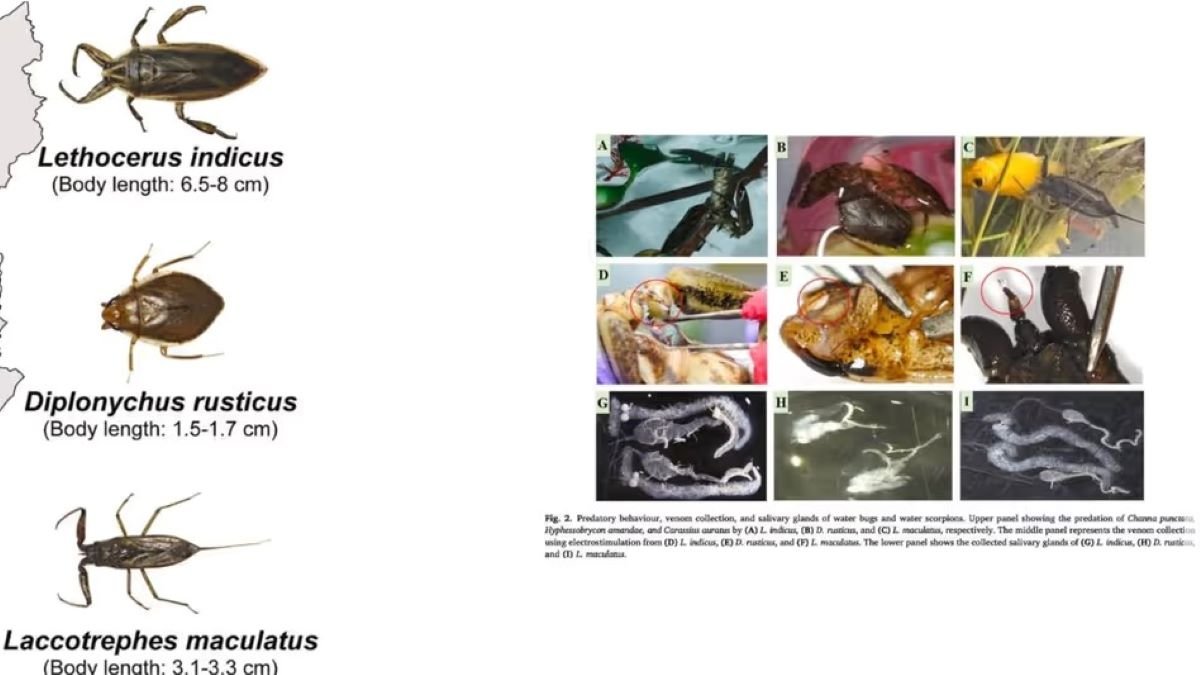
A recent scientific study conducted in Nagaland has raised concerns over the presence of venomous aquatic insects, with experts warning that similar species may also exist in Assam, posing a largely overlooked public health risk.
The study, led by Karthik Sunagar and his research team, was published on March 26 and examined three species of water-dwelling insects found in a pond in Dimapur. Researchers found that the venom of these insects contains proteins similar to those present in viper snake venom, enabling them to immobilise prey almost instantly.
According to the findings, these insects use ultra-fine, needle-like appendages—thinner than a syringe—to inject venom. They are capable of both swimming and flying and are typically found hiding beneath mud or debris in stagnant water bodies.
Experts say that although these insects usually avoid humans, accidental contact may occur during activities such as fishing or wading in ponds. Surajit Giri, associated with rural healthcare initiatives in Assam, stated that bites can be extremely painful, often causing severe swelling and, in rare cases, serious complications.
He further noted that the venom may interfere with blood clotting, similar to viper bites, potentially leading to prolonged bleeding or internal haemorrhage. He cited a suspected case in Assam where an elderly man reportedly died after experiencing intense pain and stroke-like symptoms, possibly due to venom-induced bleeding in the brain.
Medical experts have cautioned that such incidents may often be misidentified as snakebites due to sudden pain and lack of visible bite marks. They have called for increased awareness, better documentation, and scientific investigation into unexplained injuries or deaths linked to water bodies.
Authorities and healthcare professionals have urged the public to remain vigilant and report unusual insect sightings or unexplained water-related injuries. Experts emphasised that community participation will be crucial in understanding and addressing this emerging environmental and public health concern.