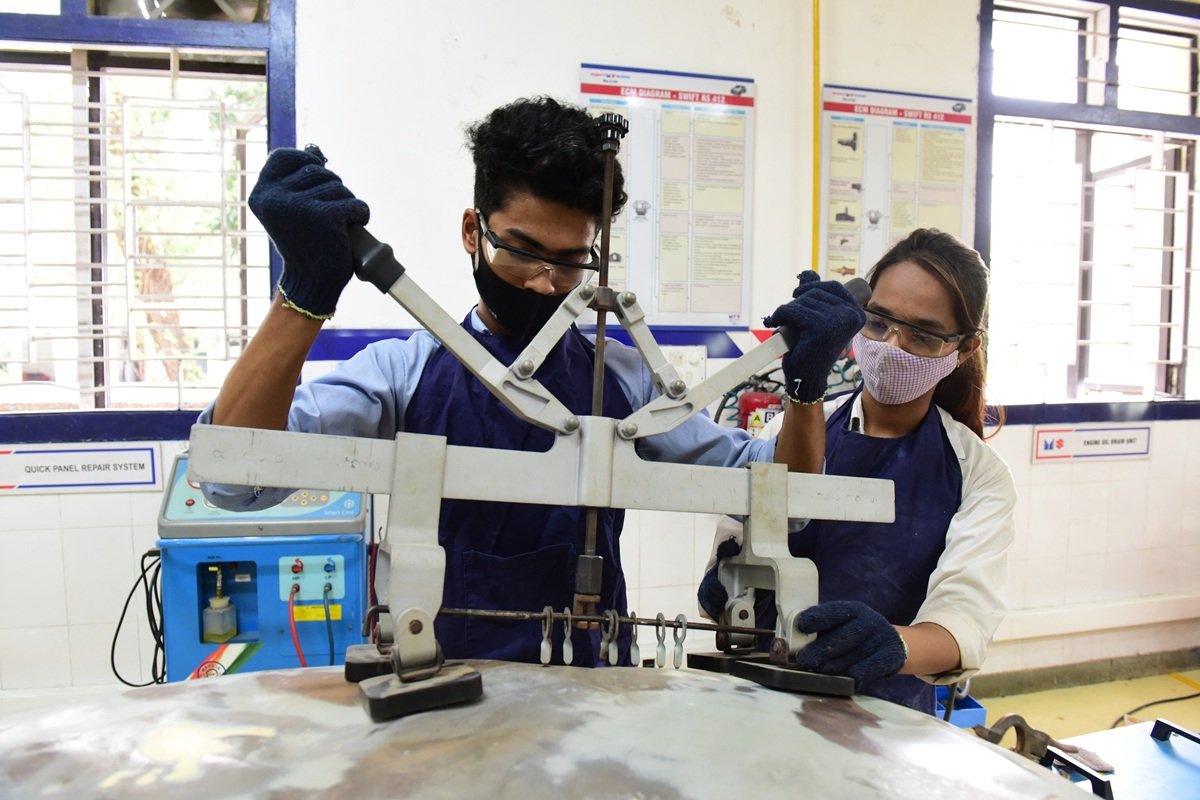
The Ministry of Skill Development and Entrepreneurship has mandated 150 hours of On-the-Job Training (OJT) or Group Project for trainees under the Craftsmen Training Scheme (CTS). The detailed implementation guidelines were issued by the Directorate General of Training and are effective from the 2022–23 academic session.
The reform comes as part of CTS restructuring in line with the National Education Policy 2020. The annual training duration has been reduced from 1,600 hours to 1,200 hours, with 150 hours earmarked for structured industry exposure. Trainees will be eligible for OJT after completing three months of institutional training. Assessment will include mentor evaluation, logbook review and viva during practical exams, with grades reflected in marksheets and industry-approved certification issued by ITIs. State Directorates may also provide accidental insurance and logistical support for trainees placed at distant locations. OJT will be integrated into the Data Driven Grading Methodology (DDGM), while Dual System of Training (DST) candidates will undertake mandatory project work.
Minister of State (Independent Charge) Jayant Chaudhary said the move aims to deepen industry–institution linkages and ensure youth are job-ready and future-ready.
In Guwahati, stakeholders in Assam’s logistics, tea processing and small manufacturing sectors see the reform as a positive trigger for workforce quality enhancement. Improved industry-aligned skills are expected to support regional industrial growth, strengthen MSME productivity and reduce post-recruitment training costs for employers across the city’s expanding industrial and service clusters. Launched in 1950, CTS continues to be a key driver of India’s skilled workforce development, supported by NCVET and DGT certification.