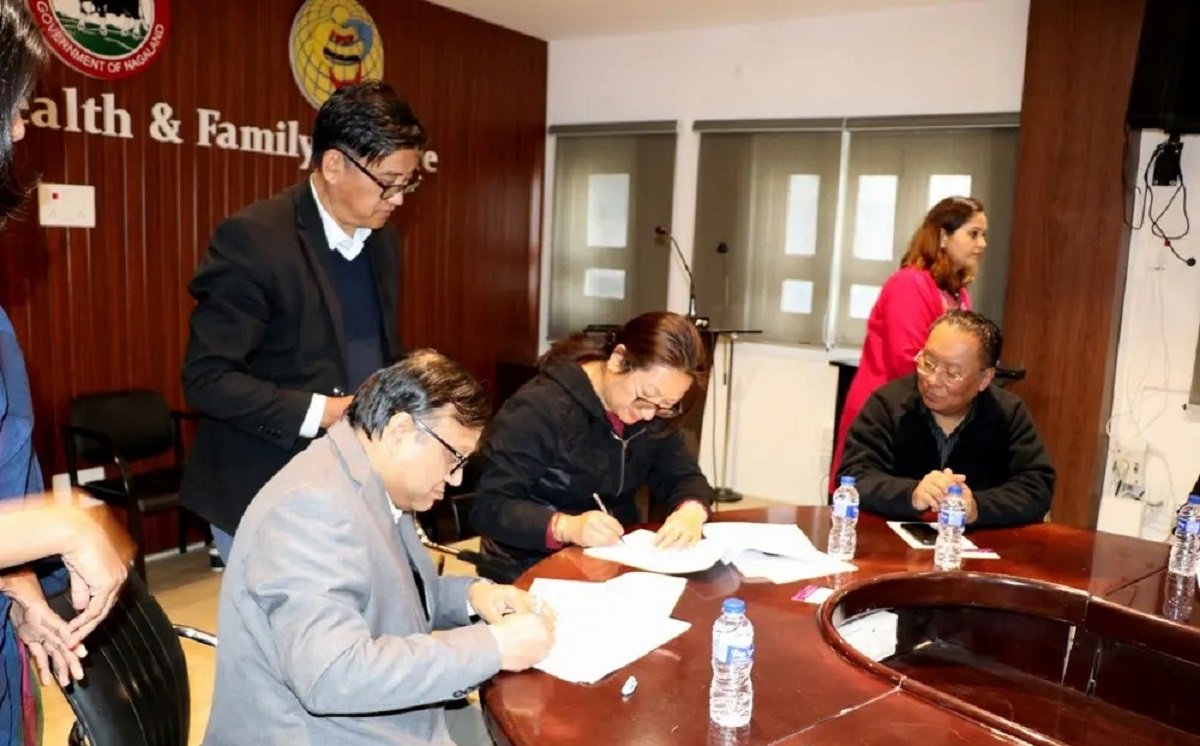
In a step aimed at improving healthcare delivery and strengthening the public health system, the Nagaland Department of Health and Family Welfare (H&FW) signed a Memorandum of Understanding (MoU) with The George Institute (TGI) for Global Health, India, on February 16 at the IDSP Conference Hall of the H&FW Directorate in Kohima. Officials said the partnership is expected to support research-driven healthcare planning, build institutional capacity, and empower communities to take a more active role in improving health outcomes across the state.
The signing ceremony marked the formal launch of a collaborative initiative focused on evidence-based research, training of healthcare personnel, and community-oriented health programmes. The partnership aims to bring together the technical expertise of The George Institute and the field-level experience of the state health department to develop solutions suited to local healthcare challenges.
Welcoming the participants at the event, Deputy Director of Health and Family Welfare Dr. Thomas Keppen explained the background of the collaboration and how discussions between the two institutions gradually led to the signing of the agreement. He expressed confidence that the partnership would provide meaningful benefits to the healthcare sector in Nagaland, especially in strengthening planning, research, and implementation of public health initiatives.
Principal Director of Health and Family Welfare Dr. Mereninla Senlem described the sig
ning of the MoU as the beginning of a new phase of cooperation aimed at improving the overall health system of the state. She said the agreement represents more than a formal arrangement, as it reflects a shared commitment to collaboration, innovation, and joint responsibility in addressing health challenges. According to her, partnerships of this nature are important for ensuring that policies and programmes are guided by reliable data, research findings, and community participation.
Dr. Senlem also highlighted the international reputation of The George Institute for Global Health, noting its long experience in conducting research and supporting health system reforms in different countries. She said the Government of Nagaland was honoured to collaborate with an institution known for its work in evidence-based public health solutions and large-scale community-focused interventions.
A major component of the collaboration will be the implementation of the PATANG project—Promoting Community Action for Health—which aims to strengthen community participation in healthcare planning and service delivery. Under the project, efforts will be made to improve health literacy, support grassroots-level health initiatives, and strengthen coordination between communities, civil society organisations, and government agencies. Officials said the programme would build upon Nagaland’s earlier communitisation initiatives, which encouraged local involvement in managing public services.