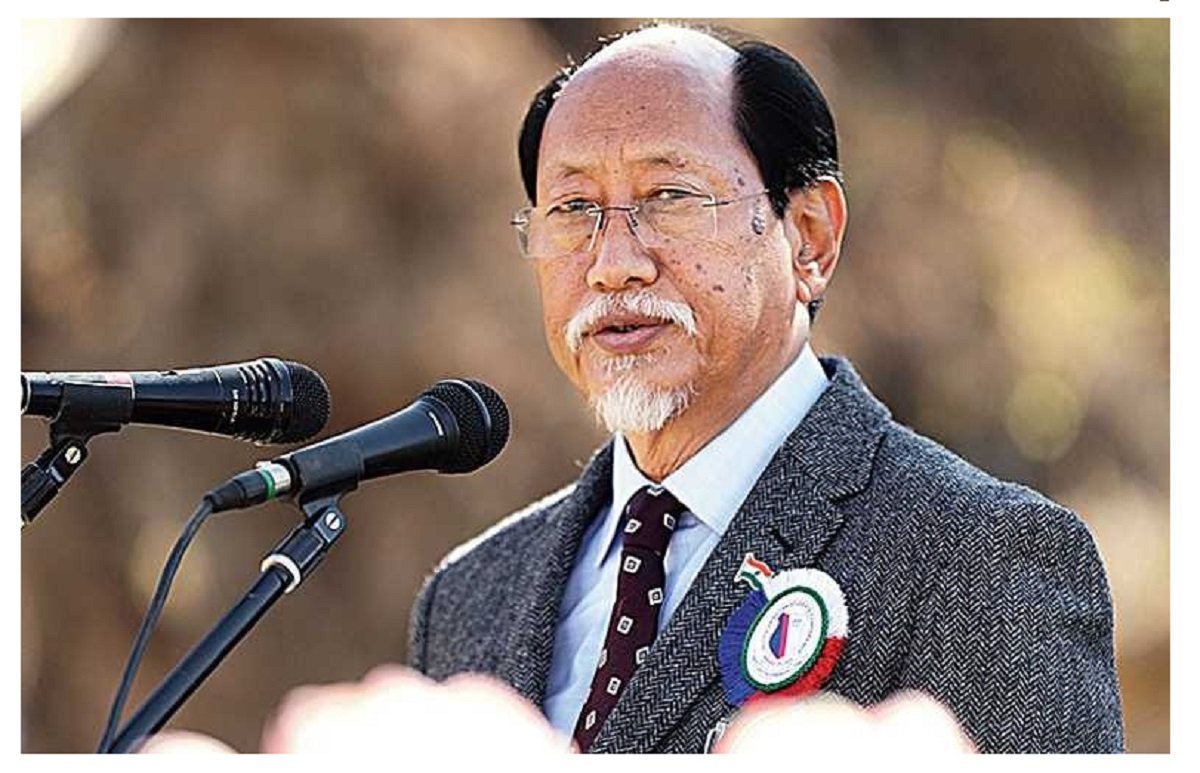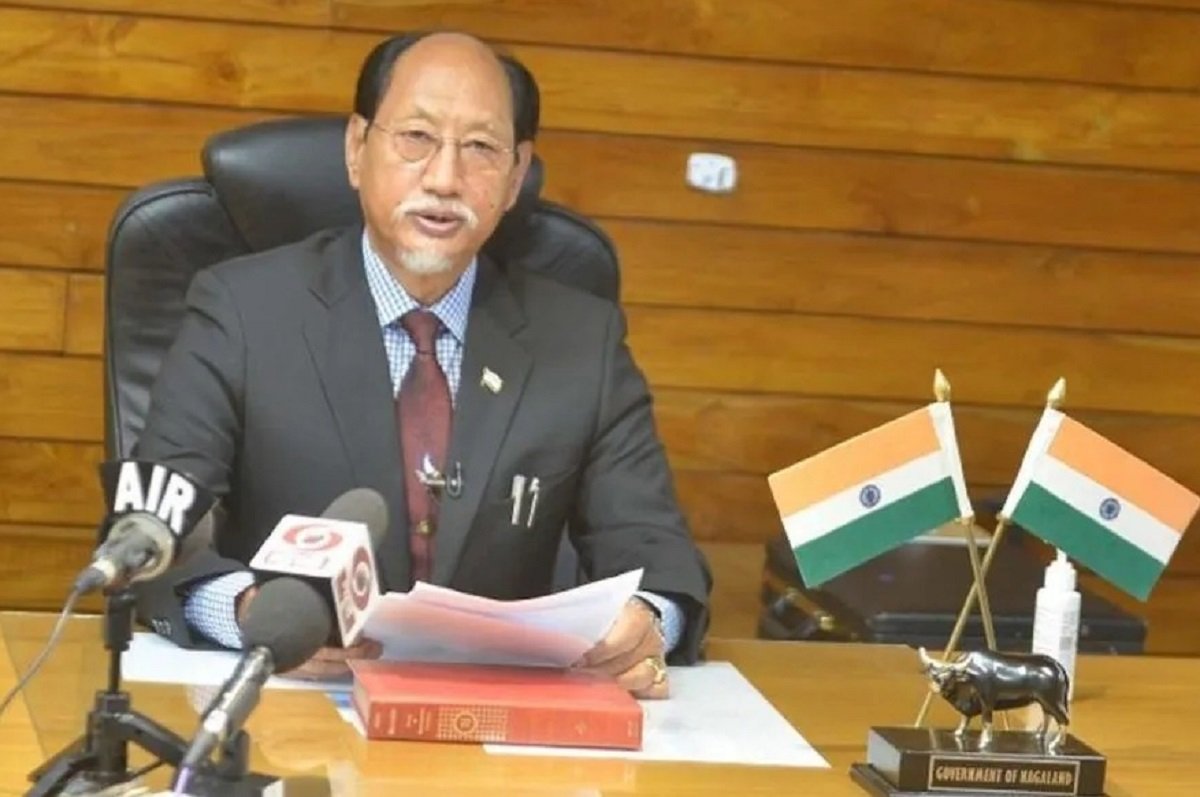
Nagaland Chief Minister Neiphiu Rio has called for an early and peaceful resolution of the long-pending Naga political issue, saying that the settlement process should move forward without further delay. He made the appeal while attending the Lui-Ngai-Ni festival celebration at Ukhrul headquarters, where he also unveiled a commemorative monolith marking the occasion. Lui-Ngai-Ni is the traditional seed-sowing festival of the Naga community and is celebrated every year with great enthusiasm across Naga-inhabited areas. The festival marks the arrival of spring and the beginning of the agricultural season, when people pray for a good harvest and prosperity. The festival was declared a State festival by the Government of Manipur in 1988 and later received recognition from the Union Ministry of Tourism in 1997 as an official tourist festival, highlighting its cultural and social importance. Addressing a large gathering as the chief guest, Rio said that unity, peace, and cooperation among all Naga tribes were essential for the progress and future of the community. He emphasised that the long-pending political issue should be resolved through continued dialogue and understanding so that the people can move forward with development and stability.
Speaking about the peace process, the Chief Minister recalled the signing of the Framework Agreement on August 3, 2015, between the Government of India and Naga political groups, as well as the “Agreed Position” signed on November 17, 2017. He noted that several years had passed since these important steps were taken, yet the final settlement had not been achieved. However, he maintained that discussions were still continuing and that the process remained active, with different points being discussed carefully and systematically.Rio also highlighted that the Nagaland Legislative Assembly had passed several unanimous resolutions over the years urging the Government of India to take steps for the integration of Naga-inhabited areas. According to him, since December 12, 1964, the Assembly has adopted six such resolutions, the most recent being on September 20, 2018. He said these resolutions reflect the collective aspiration of the Naga people for unity and peaceful coexistence. The Chief Minister further mentioned that in September 2024, a consolidated meeting of various Naga organisations was held, during which 61 organisations supported a resolution calling for political-level dialogue on the issue. The resolution received backing from 226 signatories, showing broad support from civil society groups. He said the involvement of social organisations and community leaders was important in building consensus and strengthening the peace process.
Rio also informed the gathering that a Political Affairs Committee consisting of all 60 Members of the Nagaland Legislative Assembly and the state’s two Members of Parliament had been formed to pursue the matter actively. He said the committee represents a “party-less government” approach, where leaders from different political parties are working together on the Naga political issue with a common goal. Recently, a subcommittee led by him met Union Home Minister Amit Shah on February 5 to press for an early settlement. The delegation included Deputy Chief Minister Y Patton and several leaders from across party lines, reflecting a united stand on the matter. While acknowledging that physical integration of Naga-inhabited areas could involve practical and administrative challenges, Rio stressed that emotional unity among Naga communities should not be delayed. He said building trust, strengthening relationships, and promoting cooperation among different Naga tribes were essential steps that could be taken immediately, regardless of the pace of formal negotiations. The festival programme was also attended by Manipur Deputy Chief Minister Losii Dikho, who spoke about the long journey and struggles faced by the Naga people. He said that despite many challenges over the years, the community had shown resilience and strength, emerging with a stronger sense of identity and purpose. According to him, the experiences of the past had helped shape the community and had strengthened its commitment to peace and stability. Dikho said the focus should now be on unity, development, and collective progress. He stated that the time had come for all sections of society to work together for peace rather than conflict. Stressing the importance of cooperation, he called upon people to contribute to building a stable and prosperous future for the coming generations.