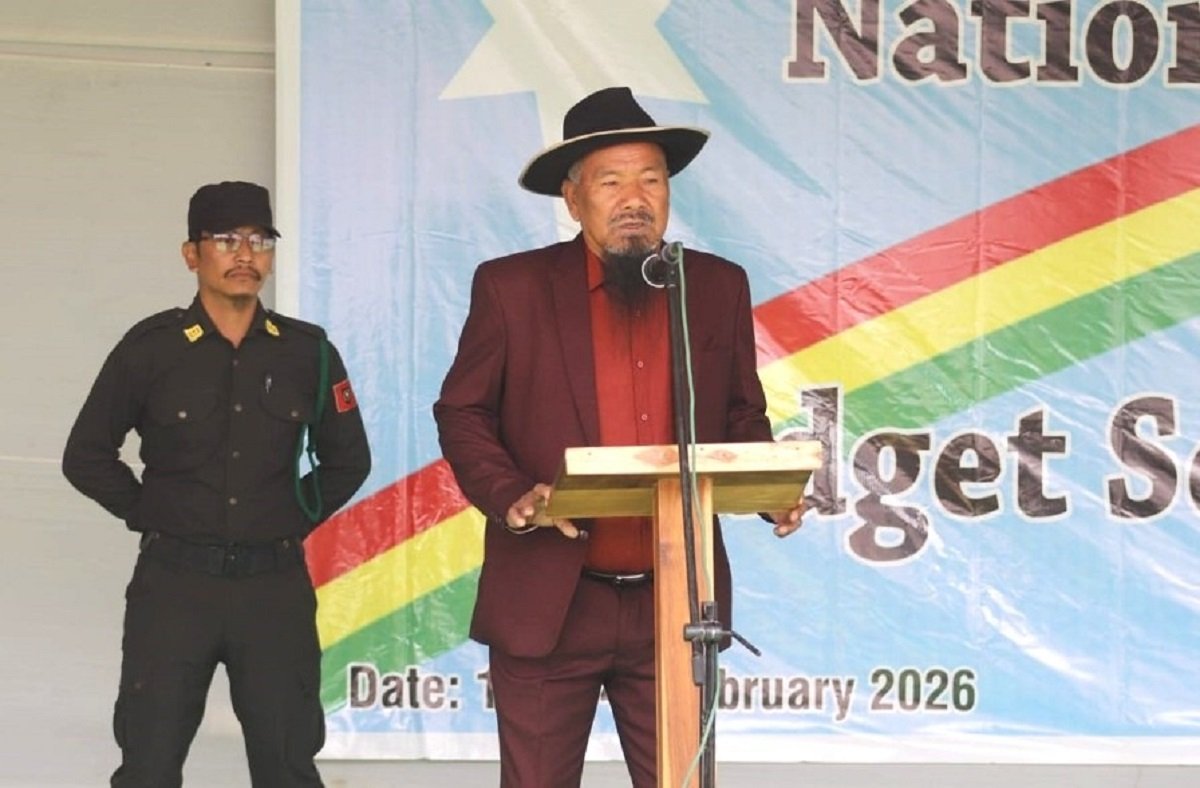
NSCN/GPRN (Khango-Vusshe) president ‘Lt. Gen.’ (Retd.) Khango Konyak has called for stronger unity among Naga people, stressing that internal divisions, organisational differences, and personal interests have weakened the collective voice of the community over the years. He made the remarks while delivering his presidential address during the national Tatar Hoho session, where several important resolutions were also adopted.
Speaking before representatives from different regions and political groups, Khango said that the present time demanded reconciliation and collective thinking more than ever before. He observed that political disagreements and organisational splits had created challenges for the Naga movement, and emphasised that these differences should be resolved through dialogue, mutual respect, and the wisdom of the community. According to him, unity was the only way to protect the interests, rights, and dignity of the Naga people in the changing political situation.
Khango urged members to choose reconciliation over confrontation and cooperation over division. He said that unity should not remain only a slogan but must become a practical commitment that guides the actions of leaders and members alike. Calling upon members to act with responsibility, he said the Naga people must defend their ancestral land and political rights with patience, wisdom, and restraint, while continuing to work towards a peaceful political solution.
During the session, ato kilonser Hokato Vusshe also addressed the gathering and welcomed members from different political groups who had recently joined the organisation. He said their joining reflected a growing desire among Nagas to strengthen the collective cause. Reminding them of their oath of allegiance, he called on all members to remain committed to serving the Naga nation with sincerity, dedication, and perseverance.
Hokato Vusshe also stressed the importance of discipline and accountability within the organisation. He said that no individual was above the law and warned that strict action would be taken against any member found guilty of misconduct or breach of discipline, in accordance with the provisions of the Yezahbo. He added that maintaining discipline and transparency was essential for building trust among the people and strengthening the credibility of the organisation.
Referring to the current political environment, he said that the year 2026 was likely to be a challenging period both for the Government of India and for Naga political groups as they continue dialogue aimed at achieving an early political settlement. He briefed the house on the prevailing political developments and mentioned the competencies submitted by the Working Committee of the NNPGs, describing them as an addendum that remains pending final signing as part of the common draft for a comprehensive Naga solution. He said continuous dialogue and cooperation among different groups would be necessary to ensure that the negotiations move forward smoothly.
The Tatar Hoho session also discussed several organisational and administrative matters and adopted a number of important resolutions. Among the resolutions adopted were strict adherence to directives issued by competent authorities and the need for accountability of members involved in mobilising people or resources for personal interests. The house resolved that such activities would not be tolerated and that all members must act strictly in accordance with organisational rules and responsibilities.
Another resolution emphasised mandatory compliance with the Yezahbo, stating that all members must follow its provisions without exception. Leaders said that uniform adherence to established rules was necessary to maintain organisational discipline and prevent internal misunderstandings. The resolutions also stressed the importance of collective responsibility, transparency in decision-making, and continued commitment to the larger goal of protecting the political rights and identity of the Naga people.
Speaker Visheto Yeptho, while addressing the gathering, expressed satisfaction over the successful conduct of the session. He acknowledged the participation of members from all regions and appreciated their active involvement in discussions and decision-making. He said the presence of representatives from different areas reflected the collective spirit of the Naga people and their willingness to work together despite various challenges.
After completing the scheduled agenda, the Speaker formally adjourned the house sine die. Leaders present at the session expressed hope that the resolutions adopted during the meeting would help strengthen organisational unity and encourage closer cooperation among different Naga political groups. They also emphasised that continued efforts toward reconciliation and dialogue would play an important role in advancing the peace process and bringing lasting stability to the region.