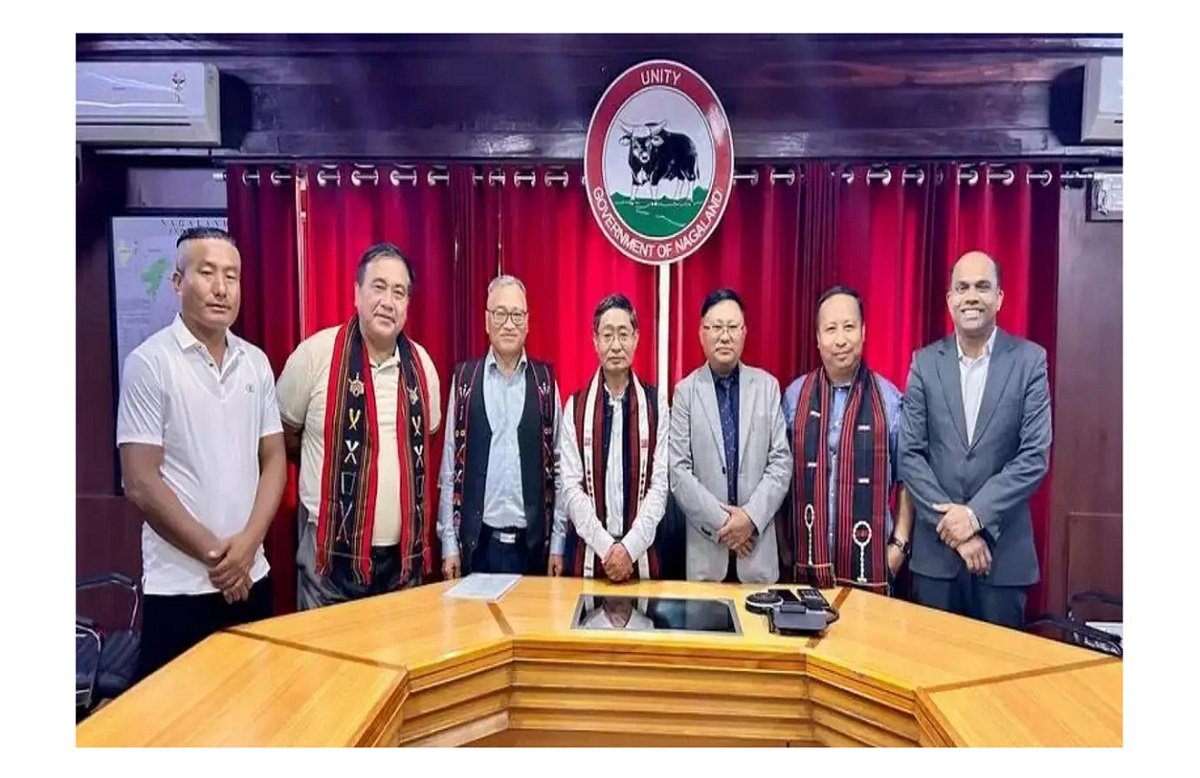
In a major administrative move aimed at addressing long-standing concerns over fairness and representation, the Nagaland government has reconstituted the committee tasked with reviewing the state’s reservation policy. The restructuring comes after months of appeals from tribal bodies seeking a more balanced and neutral approach to policy revision. Government spokesperson K.D. Keyne announced on Wednesday that the new body, officially titled the Reservation Review Committee, will consist entirely of senior government officials. The committee will be chaired by R. Ramakrishna, former Development Commissioner of Nagaland, and will operate under a fresh mandate to ensure impartiality and inclusivity in its recommendations. The Commissioner and Secretary of the Department of Personnel and Administrative Reforms (P&AR) will serve as the Member Secretary, while ex-officio members will include senior officials from the Law and Justice Department, the Home Commissioner’s Office, and other relevant state departments. The committee has been granted a six-month timeline to conduct a detailed assessment and submit its report to the government.
The decision to restructure the committee follows the disbandment of the earlier Committee on Review of Reservation Policy (CoRRP), which had included representatives from five major Naga tribes—Ao, Angami, Lotha, Rengma, and Sumi. These tribes, collectively known as the 5-Tribes CoRRP, had submitted a memorandum earlier this year calling for a review of the existing reservation structure, originally formulated in 1977. According to Keyne, the state government decided to create a committee composed solely of senior bureaucrats to maintain neutrality and avoid inter-tribal friction. “After the last round of submissions and discussions, it was felt that the review body should be free from tribal affiliations to ensure objectivity and transparency,” he explained. The newly renamed body, previously referred to as the Commission on Job Reservation Review, will now function as the Commission for Review of Reservation. The change in nomenclature, officials said, signifies a broader scope—moving beyond employment quotas to include educational and administrative dimensions of the reservation framework.
Nagaland’s current reservation policy was introduced in 1977, setting aside 25 percent of government jobs for backward tribes—3 percent for the eastern backward area and 12 percent for other backward tribes. Initially intended to run for ten years, the policy has continued for nearly five decades without a comprehensive review.