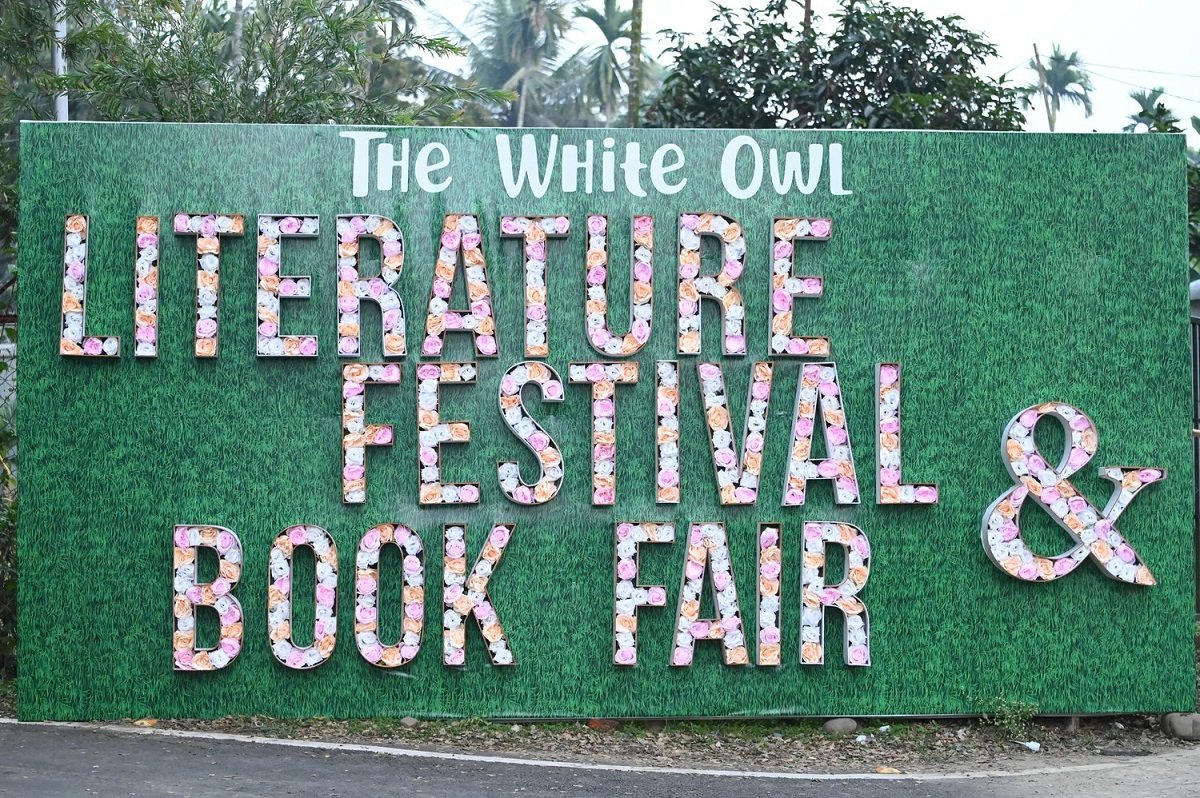
The third edition of The White Owl Literature Festival & Book Fair 2026 opened on February 5 at Town Hall, Zone Niathu by The Park, Chümoukedima. Organised by Penguin Random House India (PRHI) in collaboration with The White Owl, the three-day festival is being held under the theme “Celebrating Stories, Inspiring Minds.”
Speaker of the Nagaland Legislative Assembly, Sharingain Longkumer, attended the inaugural programme as chief guest. Addressing the gathering, he said reading plays a crucial role in shaping thoughts, speech and personality, especially in the digital age. He urged parents and society to cultivate reading habits among children rather than exposing them too early to mobile phones and digital distractions.
Longkumer praised the dedication of the festival’s founder and expressed hope that the initiative would reach the farthest corners of the state and the country. He noted that the platform enables people from Nagaland, across India and abroad to share and learn from one another’s stories. He also voiced optimism that the festival would continue to grow and inspire young minds through literature and storytelling.
Delivering the keynote address, Press Club of India president Sangeeta Barooah Pisharoty spoke about the origins of the festival, saying it was conceived to celebrate literature in a remote region by connecting local readers with national and regional authors. She said the event creates space for discovering diverse literary voices and for building a literary community in a region often seen only through the lens of conflict.
Pisharoty observed that in just three editions, the festival has established a strong literary platform in the Northeast. She added that such festivals promote cultural and intellectual growth while also supporting local economies by attracting visitors and showcasing local culture, crafts and businesses. Highlighting the region’s rich oral and written traditions, she said the festival helps bring regional narratives to the forefront and creates opportunities for local writers, poets and publishers.
Emphasising the importance of English writing and translation, she said such platforms can carry regional literature to wider national and global audiences, make works accessible to younger generations and encourage reading habits. She also urged journalists to document the region’s histories and complexities through non-fiction writing to preserve stories for posterity.
Festival director Viketuno Rio said that while books allow personal encounters with stories, literary festivals create public spaces to meet authors, discover new voices and engage with ideas. She said the festival nurtures reading culture, empathy, self-reflection and critical thinking, and continues to evolve by listening to its audience.
Rio noted the participation of diverse authors, artists and cultural voices from India and abroad, including delegates from Japan. She also highlighted the festival’s social initiatives, such as the January 31 “Run for Persons with Disabilities,” which promoted inclusion and encouraged communities to rethink how they live and act. She urged participants to read deeply, listen generously and carry forward new perspectives, empathy and respect.
The inaugural programme was chaired by Vitono Gugu Haralu, with an invocation by Kevi Z. Kevichusa. Highlights included a poetry recital by Sonali of Pordigals’ Home, who is visually impaired.