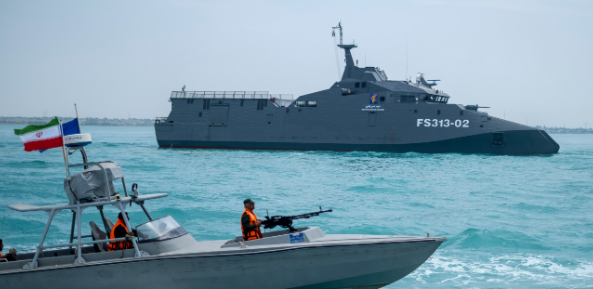
President Donald Trump has reportedly signaled a significant shift in his administration’s foreign policy objectives, informing senior aides that he is prepared to finalize a peace agreement to end regional hostilities even if the reopening of the Strait of Hormuz is not immediately secured. This strategic pivot suggests that the White House is prioritizing the cessation of kinetic military action and the reduction of American involvement in overseas conflicts over long-standing maritime demands. By decoupling the broader peace process from the complex and often deadlocked negotiations surrounding the world’s most vital oil chokepoint, the President appears to be seeking a “fast-track” exit from a costly and volatile standoff. Sources familiar with the internal discussions indicate that Trump believes a cessation of fire would provide the necessary stability to address economic concerns at home, regardless of whether every strategic waterway is instantly restored to previous status.
This approach marks a departure from traditional “maximum pressure” tactics that viewed the free flow of commerce through Hormuz as a non-negotiable prerequisite for any diplomatic thaw. National security advisors are now reportedly pivoting to draft a framework that focuses on immediate de-escalation and the establishment of a buffer zone, leaving the more intricate legal and territorial disputes regarding the Strait for a separate, secondary phase of diplomacy. While some hawks within the administration worry that leaving the waterway under its current restrictions could embolden adversaries, the President has remained steadfast in his desire to fulfill campaign promises of bringing an end to “endless wars.” The willingness to compromise on the Hormuz issue is seen by many as a pragmatic acknowledgment of the current geopolitical reality, where a total victory on all fronts may be less attainable than a swift and stable peace.
Furthermore, the President’s directive is viewed as an attempt to de-risk the global energy market by removing the immediate threat of a direct military escalation, even if shipping lanes remain complicated. Economic analysts suggest that the mere prospect of a peace deal has already begun to stabilize stock futures, as investors respond positively to the de-escalation of war rhetoric. As the administration moves forward with this new mandate, the focus will likely shift to high-level summits and back-channel communications aimed at securing a signature on a peace treaty. Whether this “peace-first” strategy will lead to a lasting regional equilibrium or leave critical vulnerabilities in global trade remains to be seen, but for now, the White House is clearly signaling that the era of protracted military engagement is drawing to a close under a new, results-oriented diplomatic doctrine.