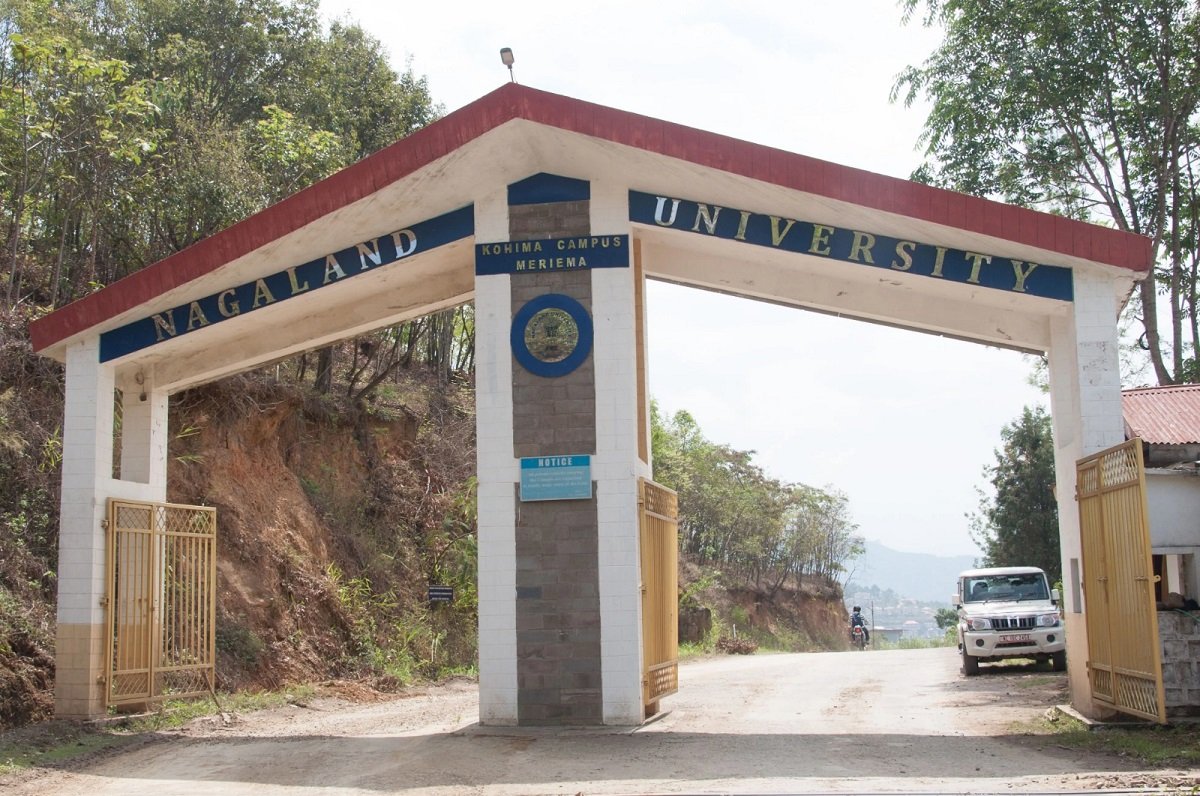
Researchers from Nagaland University and PNG Govt PG College Ramnagar, Nainital, have used advanced Geographic Information System (GIS) modelling and remote sensing techniques to investigate environmental change and degradation in Kohima district, providing important scientific insights into the fragile geo-ecological conditions of India’s North East Hill (NEH) region.
The research addressed growing concerns about environmental degradation in the Himalayan and North East Hill regions caused by both natural processes and human activities.
These include rapid urbanisation, deforestation, shifting cultivation practices and climate change, which together contribute to increasing risks such as landslides, floods, droughts and extreme weather events.
The findings were published during December 2023 in the Environmental Monitoring and Assessment, a peer-reviewed journal that publishes research on monitoring, assessment and management of environmental quality, brought out by the prestigious Springer Nature.
The paper was co-authored by Khrieketouno Belho and Prof. M. S. Rawat from the Department of Geography, School of Sciences, Nagaland University, along with Pradeep Kumar Rawat from the Uttarakhand Open University Study Centre.
The research was supported by Nagaland University through a Non-NET Fellowship awarded to Belho and by the Ministry of Tribal Affairs, Government of India.
Elaborating on the research significance even now in 2026, Prof. Rawat said, “Geo-environmentally and anthropogenically, the region is highly fragile owing to continuous seismotectonic activities, landslides, slope failures, fragmented unstable geology, geomorphology and steep rugged topography as well as very high frequency of natural hazards and disasters. The region is passing through alarming and threatening conditions due to a high rate of land use degradation which is accelerating other associated global environmental problems such as climate change and its adverse impacts. It is therefore, essential to mitigate the current environmental change and degradation. If necessary measures are not taken as soon as possible, it may lead to severe subsequent impacts. This study contributes a holistic approach to tackling such kind of environmental issues.”
Highlighting the steps needed to be taken up now to arrest the environmental degradation, Prof. Rawat added, “It has been the need of the hour to adopt the most effective and reliable geospatial technology and action-oriented management strategy so that the risk of environmental degradation could be mitigated.”
Using an integrated GIS database modelling system, the researchers analysed environmental change through three major modules — Geodiversity Informatics, Land Use Informatics and Climate Informatics. This approach allowed the team to examine multiple interconnected environmental parameters, including geological structures, land-use patterns, vegetation cover, rainfall, temperature and ecological habitats.
In addition, the study highlighted the region’s geological fragility. Analysis of earthquake records from 1982 to 2022 revealed that more than 1,100 seismic events occurred in Kohima district, averaging around 27 micro earthquakes per year with less than 4 to 2 magnitudes. Most of these were linked to tectonic faults and geological lineaments that contribute to landscape instability, erosion and landslides.
Nagaland University-Led Study Uses GIS to Map Environmental Degradation in Kohima