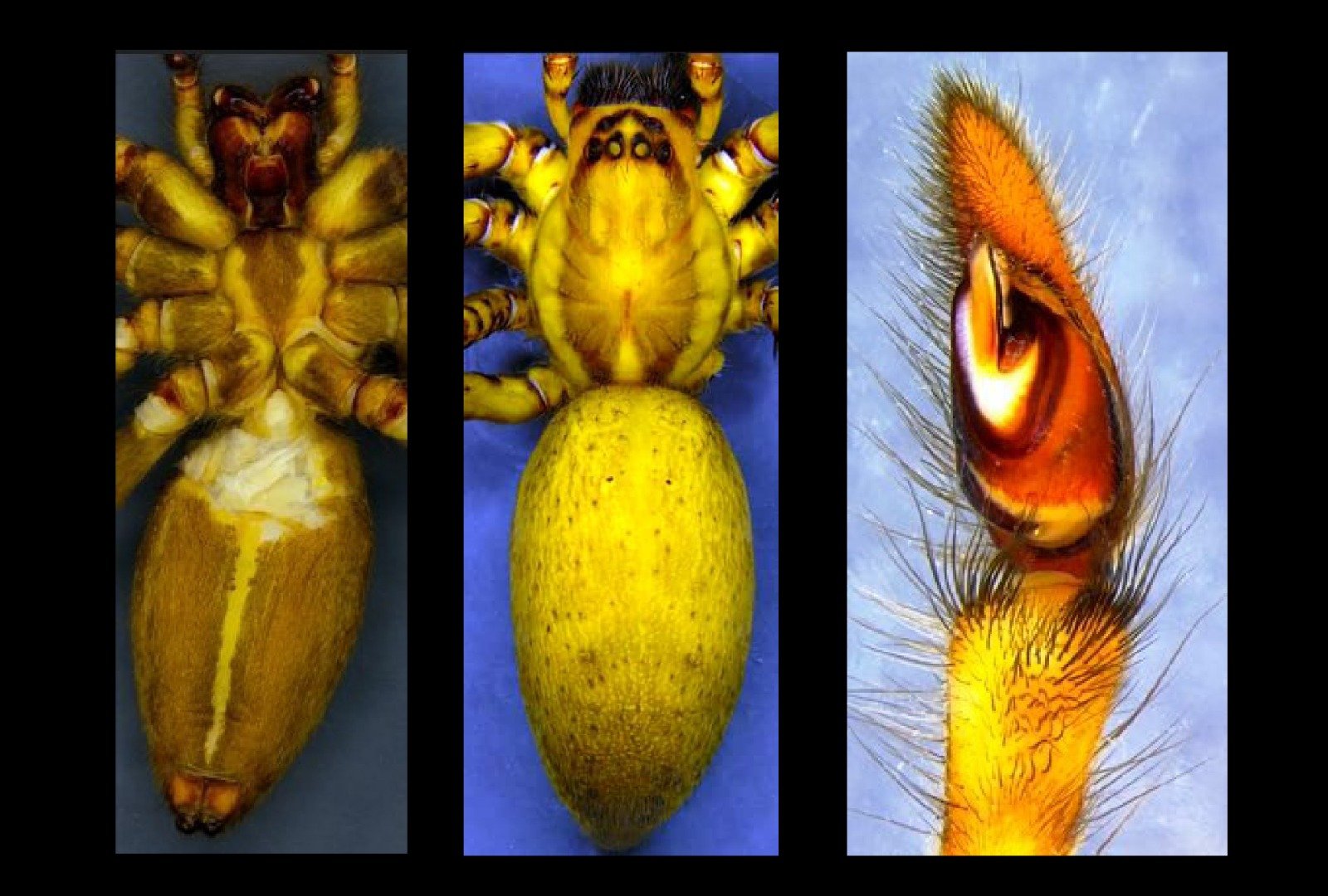
Researchers from the Zoological Survey of India (ZSI) have discovered two new species of lace-sheet-weaver spiders from the forested hills of Nagaland and documented a major range extension of another species.
The findings, published in the international journal Zootaxa, were made during a pre-monsoon faunal survey conducted in Peren and Tseminyu districts.
The newly identified species belong to the genus Psechrus and have been named Psechrus ntu and Psechrus phenshunyu, after the villages of Ntu and Phenshunyu where they were discovered.
These spiders are known for constructing large, horizontal sheet-like webs in humid forest habitats. They possess elongated and slightly flattened bodies along with long, slender legs, especially the front pair that helps them move swiftly across their webs.
The species were found inhabiting shaded forest areas, rocky crevices, and spaces beneath rocks and tree roots.
In addition to the new discoveries, researchers also recorded Psechrus himalayanus in Nagaland for the first time, extending its previously known Himalayan range into the Indo-Burma biodiversity hotspot of Northeast India.
One of the most remarkable observations during the study was a male P. himalayanus sharing a web with a female P. phenshunyu — a rare example of heterospecific cohabitation among psechrid spiders.
The study was led by arachnologists Dr. Puthoor Pattammal Sudhin, Shouvik Mali and Dr. Souvik Sen.
The team also acknowledged the support of local spider enthusiasts and the cooperation of villagers from Ntu and Phenshunyu.
With these additions, India now has nine known species of Psechrus, many of which have highly restricted and fragmented distributions. Researchers believe that many more undiscovered species may still exist in the remote forests of the region.