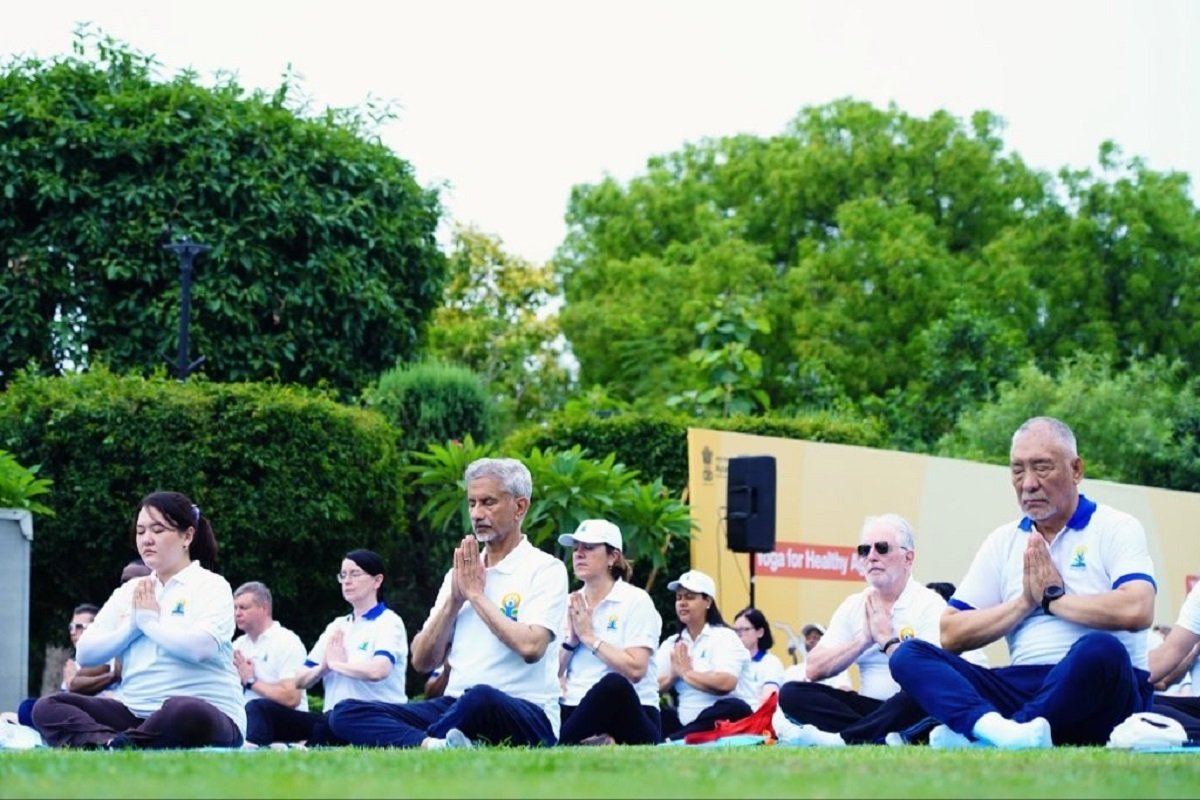
India’s strategic use of yoga as a cultural and diplomatic tool has strengthened the country’s global standing while creating new opportunities in the fast-growing wellness economy, according to developments marking 12 years of the International Day of Yoga initiative. The movement gained momentum in 2014 when Prime Minister NarendraModi proposed the International Day of Yoga at the United Nations General Assembly. The proposal received unprecedented backing from 177 countries and was adopted within 90 days. The United Nations subsequently declared June 21 as the International Day of Yoga, a move widely regarded as a landmark diplomatic success for India.
Over the years, yoga has evolved into a global wellness phenomenon. Supported by the Ministry of AYUSH, the Ministry of External Affairs, the Indian Council for Cultural Relations (ICCR), and Indian missions abroad, yoga programmes are now conducted throughout the year across continents. Mass yoga events have become a regular feature at iconic locations such as Times Square in New York, the Eiffel Tower in Paris, the Great Wall of China and Argentina’s Olympic Park. Yoga chairs, academic centres and multilingual learning resources have further expanded its international footprint. In Kolkata, the rising global demand for wellness services is opening avenues for yoga institutes, healthcare providers, wellness tourism operators and AYUSH-linked businesses.
Industry observers note that Kolkata, with its growing interest in holistic health and preventive care, is well positioned to benefit from increasing investments and consumer demand in the wellness sector. India’s yoga diplomacy has enhanced the country’s soft power while simultaneously supporting the expansion of wellness-related industries worldwide, reinforcing the philosophy of “VasudhaivaKutumbakam” in an increasingly health-conscious global economy.