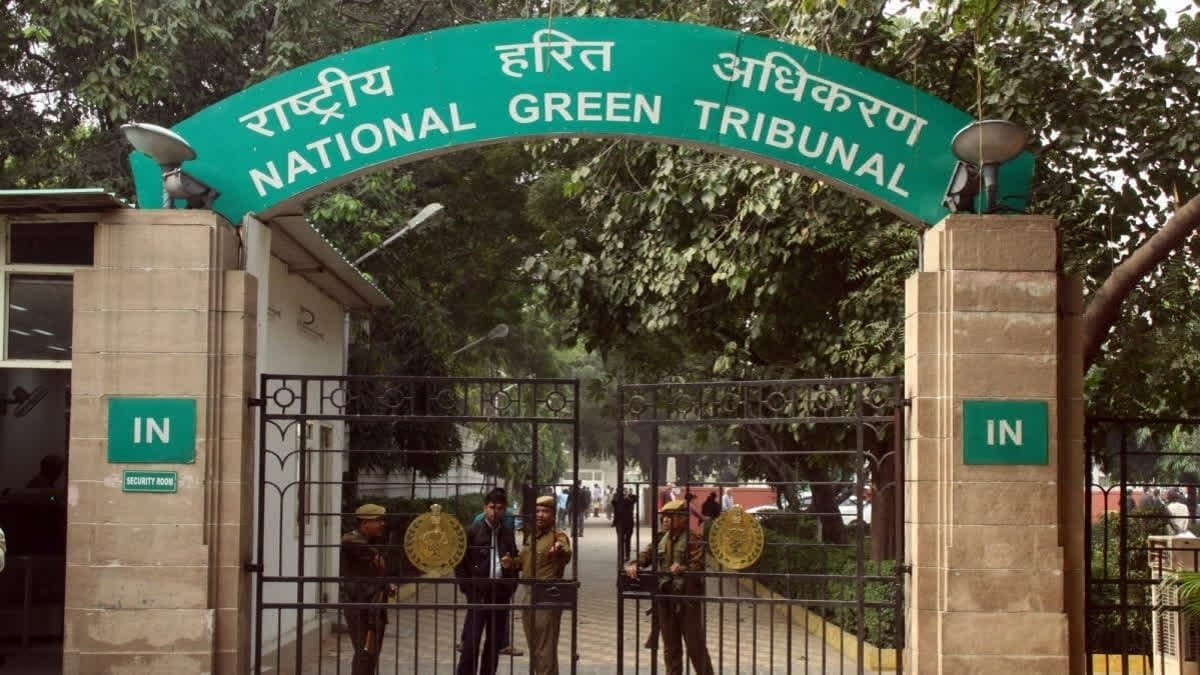
Assam is facing scrutiny of National Green Tribunal (NGT) after the Amicus Curiae flagged gaps in its waste management system.
In a report to the Tribunal, the Amicus Curiae has highlighted gaps in the solid and liquid waste management and made several observations in this regard.
Earlier, Telangana, West Bengal and Madhya Pradesh were pulled up by the Tribunal after it found discrepancies in the data on waste management submitted by these states.
In the report submitted to the Tribunal, the Amicus Curiae has stated that while significant infrastructure and remedial measures have been initiated by the state, substantial and consequential gaps continue to exist in the scientific management of solid waste, legacy waste and liquid waste across the 104 Urban Local Bodies (ULBs) including Guwahati Municipal Corporation (GMC).
The Amicus Curiae submitted the report after examining the status report filed by Assam government regarding compliance of Municipal Solid Waste Management Rules,2016 and other environmental issues.
Pointing out that Assam is not a geographically homogeneous state as it comprises the Brahmaputra and Barak
river valleys, extensive alluvial plains, hill areas, wetlands and numerous tributaries and drainage channels, the report mentioned that the environmental management strategy for Assam must therefore be fundamentally risk-based, hydrology-sensitive and decentralised, rather than based upon a
uniform model of large centralised facilities alone.
For ensuring compliance, enhance environmental safeguards, and align implementation with statutory mandates, the Amicus Curiae proposed that the GMC may consider bridging the residual gap in solid waste processing through ward-level decentralised processing and segregation.
It directed that the state may consider rechecking the claim of 100 per cent collection and transportation of waste from 104 ULBs.
Assam comes under NGT scanner after Amicus Curiae flags gaps in waste anagement