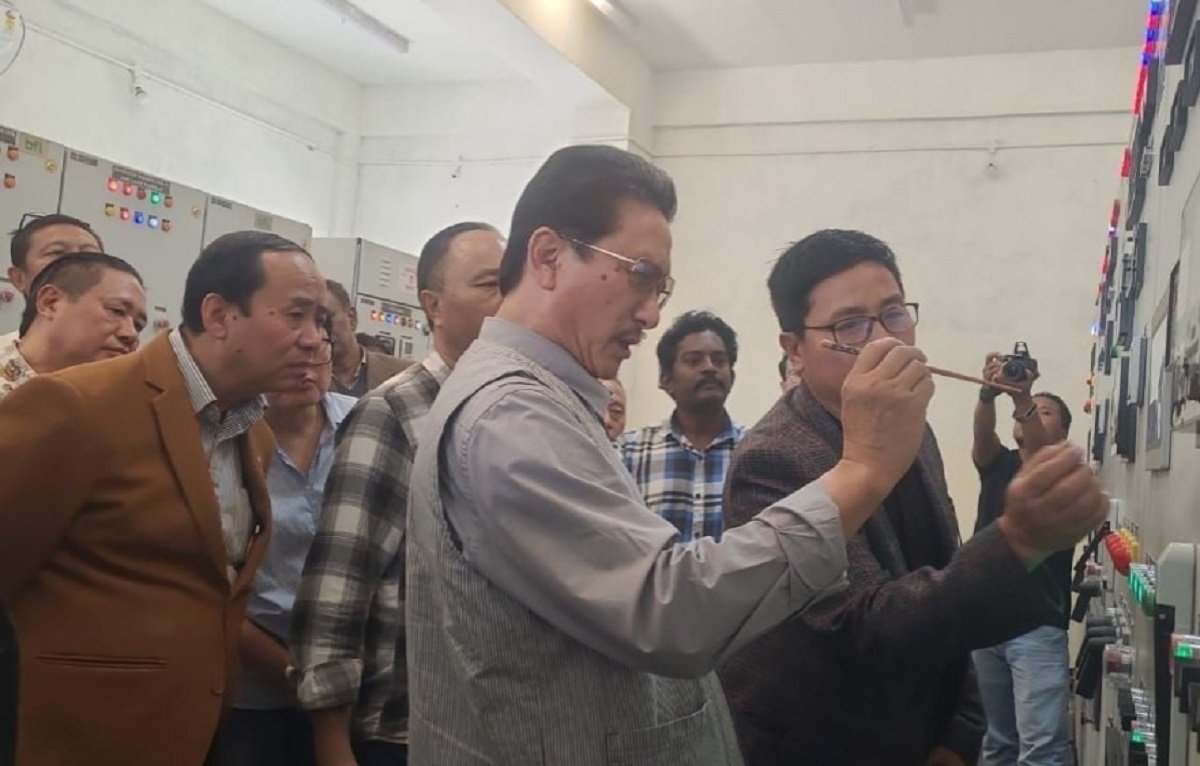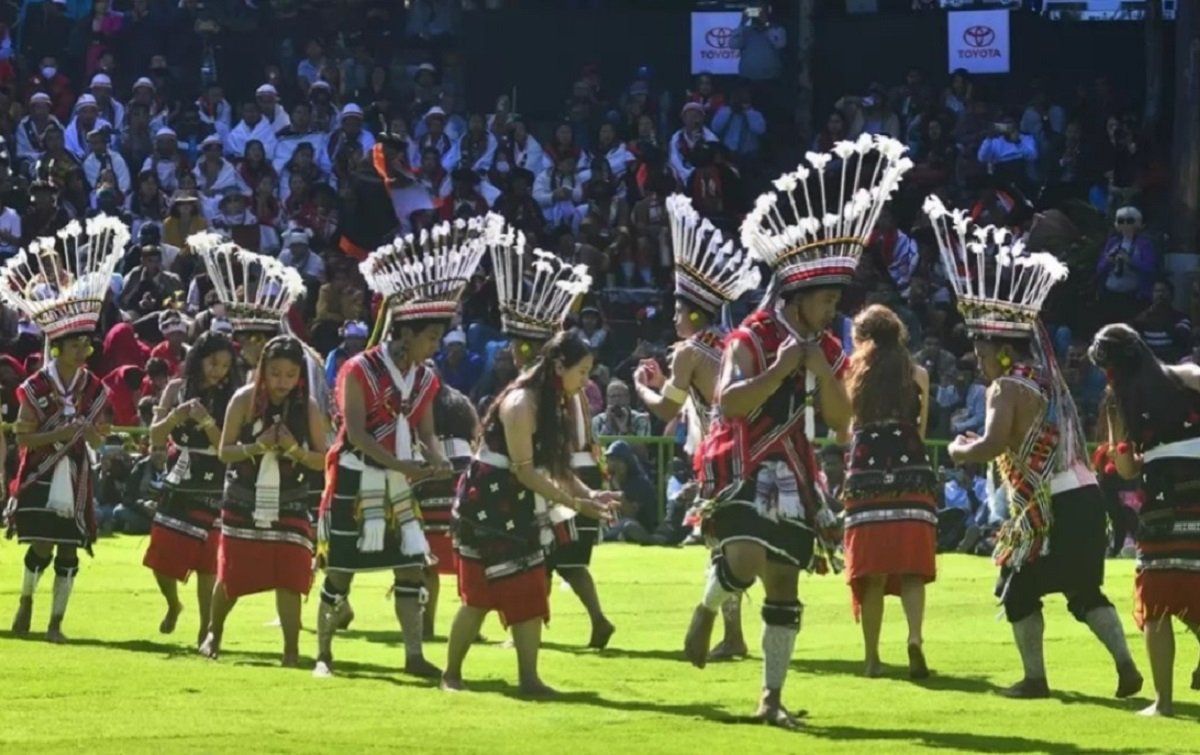
The third day of the 26th Hornbill Festival unfolded into a vibrant cultural panorama at the Naga Heritage Village in Kisama, drawing visitors into an enchanting journey through the diverse traditions, dances and folk histories of Nagaland’s tribes. According to the Department of Information and Public Relations (DIPR), the cultural segment for Day-3 was hosted by deputy chief minister Y. Patton and co-hosted by advisor K. Tokugha Sukhalu. The event was graced by several prominent dignitaries, including Thinlye Namgyal, Consul General of Bhutan in Guwahati; Air Marshal Surat Singh, Air Officer Commanding-in-Chief, Eastern Air Command; Lt. Gen. Mohit Wadhwa, GOC 101; Simon Lee Broughton, founding editor of Songlines; and other distinguished guests. The sequence of traditional performances began with the Zeliang troupe’s Akoina Lin, setting the tone for a day of rhythmic storytelling. This was followed by the Yimkhiung troupe’s Kha Kiaklak Rhimo, and the Tikhar women’s folk dance, Tainang Jong Paihi Ai, each reflecting distinct cultural identities and age-old traditions.
One of the highlights of the day came from the Sumi troupe, which showcased Akikiti, the traditional kick-fighting sport historically practised by young boys in the morung. The performance drew wide applause for its precision and athletic display. The Sangtam artistes presented Shangrü Thsaba Khi, a melodious friendship song celebrating unity and companionship. The Rengma troupe brought the energy of the Igada Festival alive through Künyeün, a war dance steeped in ritual significance. The Pochury performers added a solemn touch with Küzhegwi, a chant invoking loyalty to customs and ancestral values. Preserving the spirit of migration folklore, the Phom troupe performed Ho Ho Shou, telling the story of the tribe’s ancestral journey. This was followed by the Lotha troupe’s Myingthung Sharü, a dance honouring the village chief. The Kuki troupe presented Lenchonghoi La, a poignant tale of abduction and loss, capturing the emotional depth of tribal legends.
The performances continued with the Konyak troupe’s Gan-rin Boa, a pre-war ritual song, and the Kachari troupe’s Bagurumba, the famous butterfly dance celebrated for its graceful movements. The Khiamniungan performers depicted the harvest season through Beoyam Kinya, while the Garo troupe staged the symbolic Quarrel Dance, highlighting inter-clan rivalry and reconciliation. The day also featured traditional sports and agricultural songs, including the Chang troupe’s Khuyubü, a wrestling sport, and the Chakhesang Süte Li, which pays tribute to millet cultivation. The Ao troupe thrilled the audience with Keyi Asahba Yimya (The Tiger’s Hunt), a dramatic portrayal from tribal folklore. The cultural showcase concluded with the Angami troupe’s Lübo–Tati, featuring the single-stringed Tati, bringing a soothing musical finish to the lively celebration.