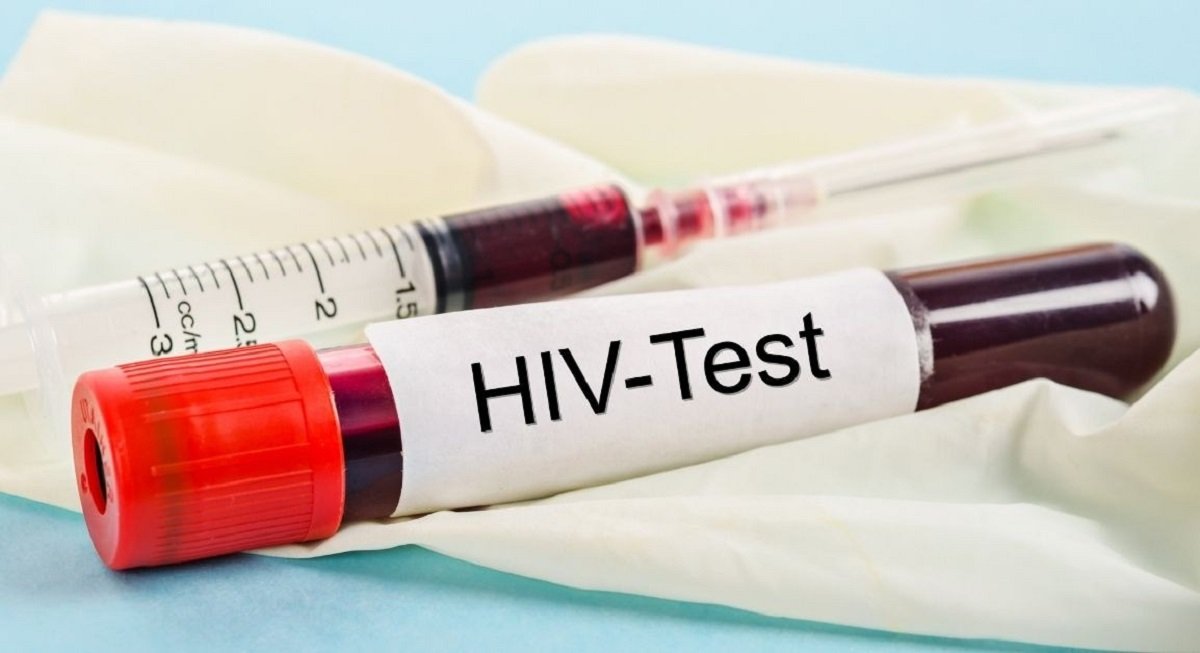
Nagaland has continued to witness a gradual decline in HIV positivity rates over the last four years, but the latest figures released under the National AIDS Control Organisation (NACO) HIV Estimation 2025 show that Dimapur district still recorded the highest positivity rate in the state during 2025-26. The latest programme data revealed that Dimapur reported an HIV positivity rate of 1.30 per cent in 2025-26, the highest among all districts in Nagaland. However, the district also showed a steady fall in the number over the years. The positivity rate in Dimapur stood at 2.26 per cent in 2022-23 before declining to 1.67 per cent in 2023-24 and 1.57 per cent in 2024-25. Nagaland remains one of the states with a high HIV burden in the country. According to the report, the state has the second-highest HIV prevalence in India after Mizoram. Nagaland’s adult HIV prevalence currently stands at 1.37 per cent, far above the national average of 0.2 per cent. Mizoram recorded the highest prevalence at 2.75 per cent. While Dimapur continued to top the list in 2025-26, several districts recorded major improvements over the years. Among them, Noklak showed the sharpest decline in HIV positivity. The district had recorded a very high positivity rate of 5.53 per cent in 2022-23, which was the highest reported in the state during that period. The figure later dropped sharply to 1.47 per cent in 2023-24, followed by 1.17 per cent in 2024-25 and further down to 0.87 per cent in 2025-26.
The overall HIV positivity trend in Nagaland also showed steady improvement during the four-year period. The state’s positivity rate declined from 1.36 per cent in 2022-23 to 1.13 per cent in 2023-24. It further reduced to 1.02 per cent in 2024-25 and came down to 0.86 per cent in 2025-26. Apart from Dimapur, districts that recorded comparatively higher positivity rates during 2025-26 included Peren with 0.96 per cent, Kohima with 0.94 per cent, Noklak with 0.87 per cent and Wokha with 0.86 per cent. Kohima also showed gradual improvement over the years. The district’s positivity rate dropped from 1.21 per cent in 2022-23 to 0.94 per cent in 2025-26. Tuensang recorded a similar trend, declining from 1.47 per cent to 0.71 per cent during the same period. Several other districts also witnessed improvement. Kiphire’s rate came down from 0.78 per cent to 0.56 per cent, while Mon district improved from 0.51 per cent to 0.31 per cent. Phek remained unchanged at 0.74 per cent for three consecutive years before registering a sharp decline to 0.30 per cent in 2025-26. However, the report also pointed out that some districts recorded a rise in HIV positivity in the latest assessment period. Wokha saw an increase from 0.58 per cent in 2024-25 to 0.86 per cent in 2025-26. Zunheboto also reported an increase from 0.31 per cent to 0.54 per cent during the same period.
Longleng recorded the lowest HIV positivity rate in Nagaland in 2025-26 at 0.13 per cent. The report further highlighted that Nagaland’s adult HIV prevalence among people aged between 15 and 49 years has remained above 1.3 per cent for more than a decade. This stands in sharp contrast to the national trend, where HIV prevalence has steadily declined from 0.32 per cent in 2010 to 0.2 per cent in 2025. Age-wise analysis of cases recorded between April 2025 and March 2026 showed that people in the 25-34 age group were the most affected, accounting for 38.47 per cent of total cases. This was followed by the 35-49 age group, which accounted for 33.47 per cent. The 15-24 age group accounted for 15.32 per cent of cases, while children below 14 years made up 4.39 per cent. People aged 50 years and above accounted for 8.35 per cent of the total cases.