Wildlife conservation organisation Aaranyak has introduced warping drum technology to women handloom weavers living around the Manas landscape as part of an initiative to promote sustainable livelihoods and improve working conditions.
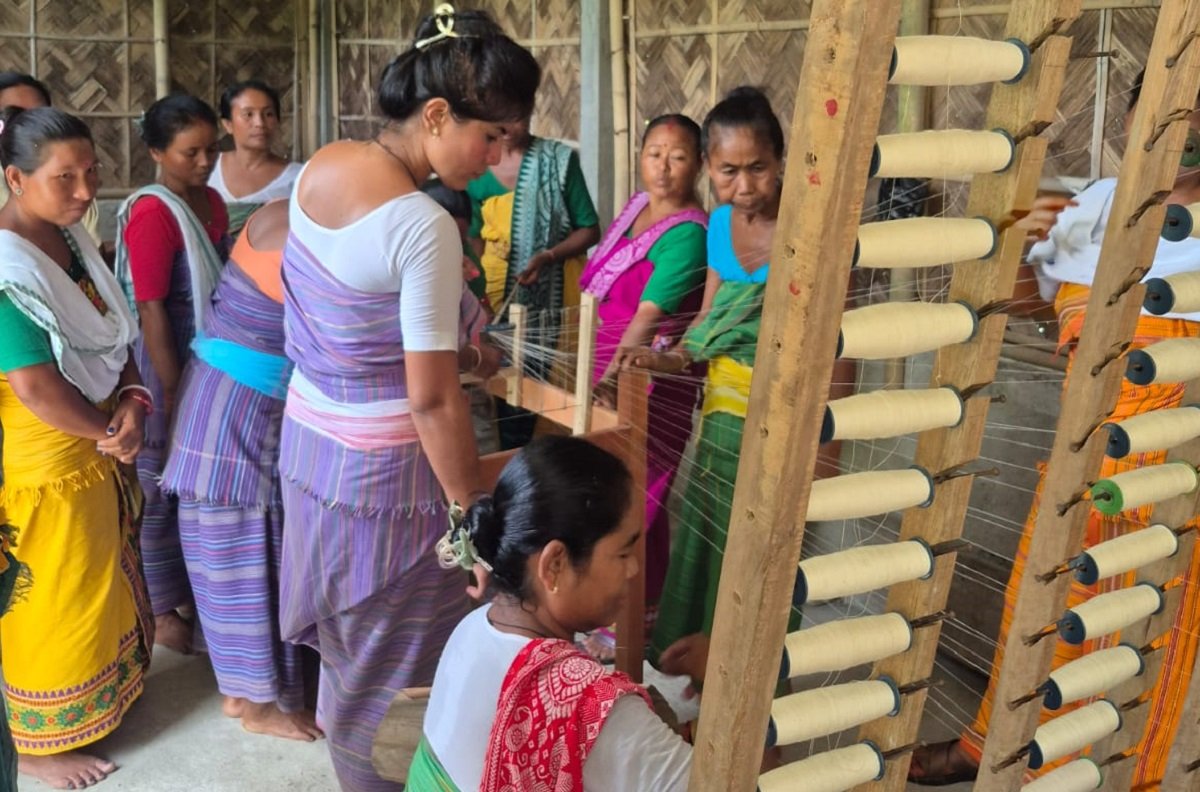
A specialised training programme on warping drum technology and its application in handloom weaving was organised at Gorumara, Koklabari, under the Bhuyanpara Range of Manas National Park, on August 26, 2026.
The initiative aims to integrate appropriate modern technology into traditional handloom practices while improving productivity, product quality and income opportunities for women weavers living in fringe areas of the landscape.
Twenty women handloom weavers from Koklabari participated in the training. The programme was designed to enhance their technical skills and reduce the physical strain associated with traditional weaving methods.
The training focused on the use of warping drums, which can make the warping process more efficient and safer while reducing dependence on outdoor working conditions.
Warping is an essential stage of handloom weaving. Traditionally, many weavers in the region carry out the process along roadsides or in open spaces, making it time-consuming and physically demanding. The practice can also become difficult and risky during adverse weather conditions.
Through practical demonstrations, the participants received step-by-step training, beginning with bobbin winding and continuing through the completion of the warping process.
Although warping drum technology is already used in the wider handloom sector, its adoption is relatively new among the participating weavers. The technology is expected to help reduce physical drudgery, save time and energy, and improve the efficiency and consistency of their work.
Aaranyak said combining traditional weaving knowledge with suitable technology could create better working conditions while enhancing the economic potential of rural handloom production.
Women play a central role in the rural handloom sector, and strengthening their technical skills can contribute to household income, economic independence and long-term livelihood security. The initiative also aims to ensure that improved skills and knowledge are passed on to younger generations, helping traditional weaving practices remain relevant and economically sustainable.
The training was conducted by Rekha Baro, a handloom weaver and professionally qualified trainer from the region with extensive experience in handloom technology and its applications. She provided practical, step-by-step guidance throughout the programme.
One of the participating weavers, Pokhila Boro, said the new technology would allow them to carry out warping indoors irrespective of weather conditions and reduce the physical effort involved in the process.
“The trainees are learning quite attentively and are able to complete the module very fruitfully,” Baro said. She also shared her contact details with the participants to provide assistance after the training if required.
The purpose and objectives of the programme were explained by Dr M. Firoz Ahmed, Director and Head of Aaranyak’s Tiger Research and Conservation Division (TRCD) and Herpetofauna Research and Conservation Division (HRCD), along with Detsung Basumatary, Manager, TRCD and HRCD.
Other Aaranyak team members who participated in the programme included Momita Narzary, Pankaj Das, Daimalu Basumatary, Barnali Baro, Bubli Rani Basumatary and Sonia Basumatary.
The initiative forms part of Aaranyak’s broader efforts to promote alternative and sustainable livelihoods and nature-based solutions among indigenous people and local communities living around ecologically important landscapes.
By strengthening community-based livelihoods and enhancing the capacities of women, such interventions aim to improve economic resilience while contributing to long-term conservation goals.
Aaranyak works with indigenous people and local communities across Northeast India to conserve the region’s biodiversity and natural heritage while supporting sustainable livelihood opportunities. Its Natural Resource Management Programme in the Manas Landscape is supported by IUCN-KfW.