The Department of Physiotherapy of Assam Royal Global University (RGU) observed World Physiotherapy Day with a series of awareness and academic activities on Tuesday.
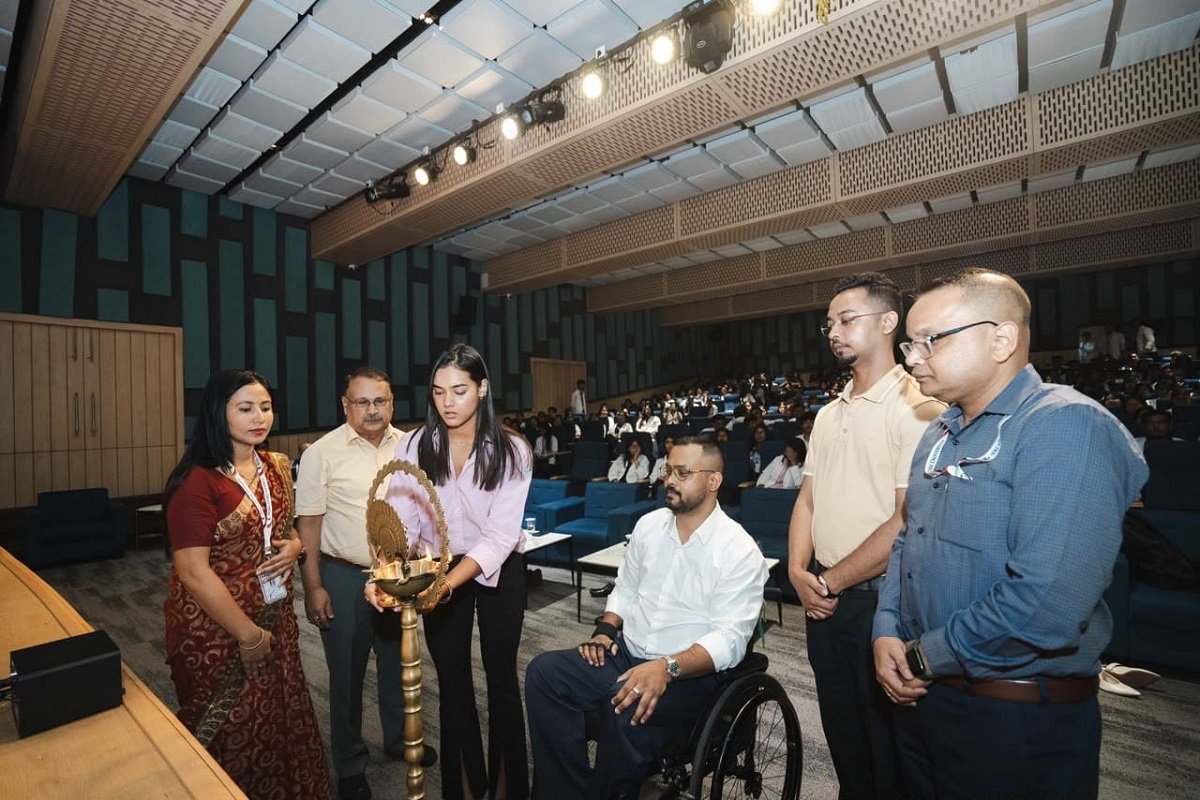
A key feature of the programme was an expert session on “Prevention, Management, and Rehabilitation of Cardiovascular Disease and Stroke,” bringing together perspectives from healthcare, technology and sports.
Addressing the gathering, mostly physiotherapy students, Rajdeep Baruah, Founder, North East Neuro Rehab and Recovery Institute (NeRI) and Senior Consultant – Infosys Consulting, brought a deeply personal dimension to the session, sharing his own journey of recovery following a spinal injury sustained in an accident a few years ago.
The injury had left him unable to stand on his feet, making rehabilitation an integral part of his journey.
Drawing from his personal experience, Baruah underlined the critical importance of rehabilitation in helping individuals regain functional abilities and rebuild their lives after serious injuries and health conditions.
“Physiotherapy is important, rehab is much more important,” he said, emphasising that recovery does not end with medical treatment but requires sustained rehabilitation and support. He also spoke about his organisation’s efforts to develop a “low-cost, high-impact” model, particularly for patients in the Northeast.
Recalling her own experience of sustaining an injury and undergoing physiotherapy, Shivangi Sharma, ace swimmer and a student of RGU, spoke about the significant role physiotherapy played in her recovery and sporting journey.
She said, “Physiotherapy played a very, very important role in my life.” Her remarks highlighted the significance of physiotherapy in supporting athletes, preventing injuries, facilitating recovery and helping individuals maintain physical fitness and performance.
Dr. Faraaz Shah, MPT, Head of Physiotherapy at NeRI, spoke on the physiotherapy perspective in cardiovascular disease and stroke, focusing on rehabilitation, mobility, exercise, restoration of functional abilities and improving quality of life following illness.
The day-long programme also featured a quiz competition, poster presentation competition, street play and cultural programme, providing students with creative platforms to communicate health messages and spread awareness about cardiovascular health, physical activity and rehabilitation.