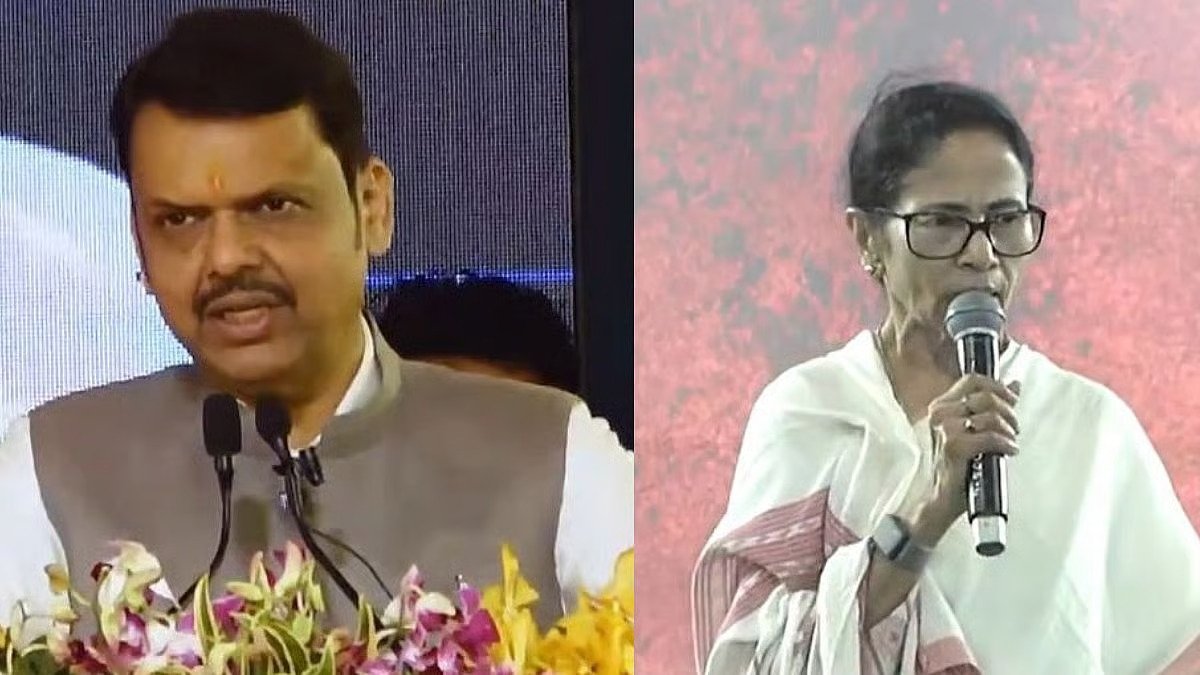
The political climate in West Bengal reached a boiling point on April 17 as Maharashtra Chief Minister and BJP veteran Devendra Fadnavis landed in the state to deliver a stinging critique of the ruling Trinamool Congress (TMC). In his first major press conference ahead of the 2026 Assembly elections, Fadnavis presented a data-driven attack, alleging that the “Maa, Mati, Manush” government has steered the state into a perilous “debt trap” while failing to translate industrial promises into reality.
Fadnavis began by highlighting a stark decline in West Bengal’s economic stature. He noted that a state that once comfortably ranked among India’s top five economies has now lost its momentum. Central to his argument was the state’s debt-to-GSDP ratio, which he claimed stands at a staggering 39%—well above the recommended national benchmark of 25%. According to the BJP leader, this fiscal mismanagement reflects a system that is focused on self-preservation rather than public welfare, leaving the state exchequer drained despite its vast natural and mining resources.
The Maharashtra CM further challenged the TMC to move beyond “MoUs on paper” and show actual industrial output. He alleged a significant gap between signed agreements and ground-level production, questioning why businesses continue to exit the state despite government claims of investment. The critique extended to the state’s administrative framework, particularly the pay structure for government employees. Fadnavis pointed out that while most of India has transitioned to the 7th Pay Commission, West Bengal remains stuck in the 5th or 6th framework, which he described as a clear sign of “financial stress and administrative lag.”
The attack was not limited to economics; it touched upon the very fabric of democracy in the state. Fadnavis raised serious concerns regarding the alleged intimidation of constitutional bodies. “What kind of democracy is this where institutions like the CAG are allegedly threatened and judicial officials are targeted?” he asked, suggesting a climate of institutional decay. He asserted that the promise of the TMC’s founding slogans has failed to materialize for the common man, necessitating a shift toward the BJP’s development-centric agenda.
As the 2026 elections approach, the BJP appears to be positioning the state’s financial health as a central campaign pillar. By bringing in a leader like Fadnavis—known for his focus on infrastructure and investment in Maharashtra—the party is signaling its intent to offer a technocratic alternative to the current administration. With the TMC yet to issue a detailed rebuttal to these specific fiscal charges, the stage is set for an election season dominated by debates over debt, development, and the future of Bengal’s economy.