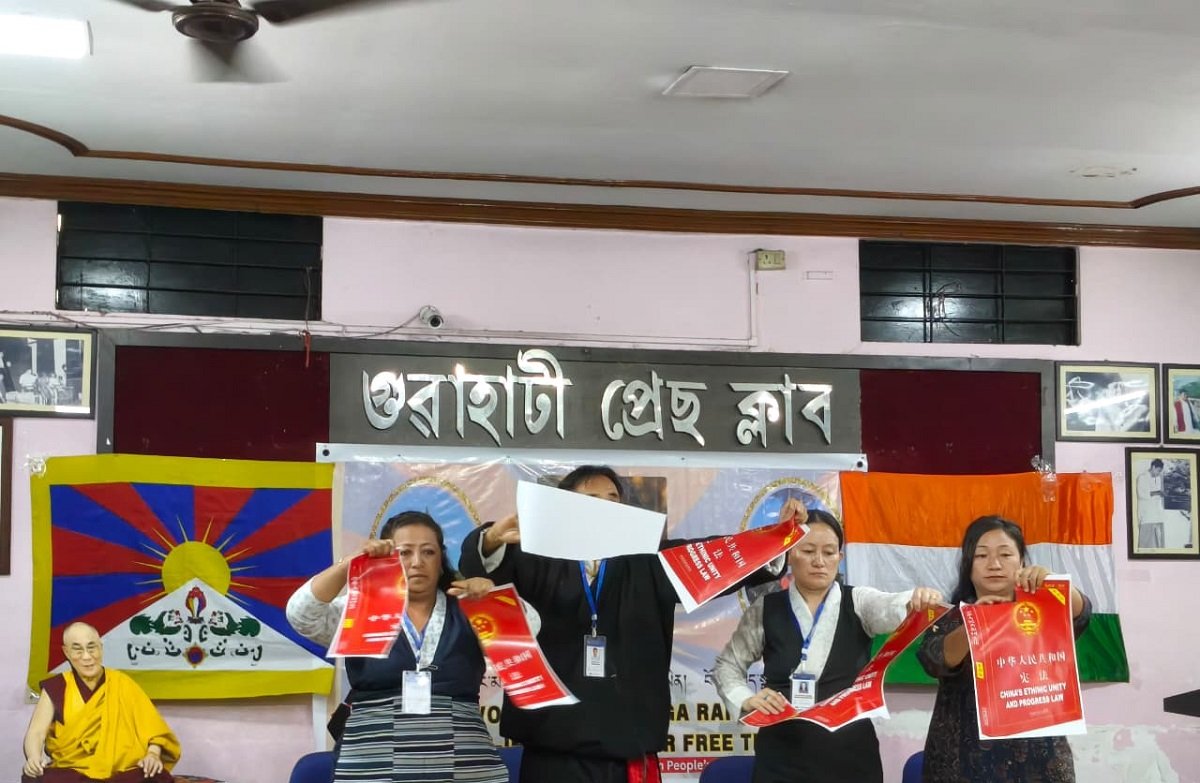
Tibetan advocacy groups in Northeast India have paid tribute to activist Lobga Rangzen, who died earlier this month after carrying out a self-immolation protest outside the United Nations headquarters in New York, while renewing calls for greater international attention to the human rights situation in Tibet.
According to Tibetan organisations, Rangzen, 52, set himself on fire on July 2 in protest against Chinese policies in Tibet and to call for the restoration of Tibetan independence. The groups said he also opposed China’s Ethnic Unity and Progress Law, which came into effect on July 1, arguing that it could further affect Tibetan cultural, linguistic and religious identity.
The organisation in a press meet held at the Guwahati Press Club, described Rangzen’s death as part of a broader movement highlighting concerns over the situation in Tibet since China assumed control of the region in the 1950s. They alleged that Tibetans continue to face restrictions on language, religion, cultural practices and political expression. The document also raised concerns over education policies, surveillance, detention of activists and environmental issues linked to infrastructure projects on the Tibetan Plateau.
The advocacy groups referred to more than 170 reported self-immolation protests by Tibetans since 2009, saying the incidents reflected growing frustration among sections of the Tibetan community. They reiterated support for a peaceful resolution of the Tibet issue through dialogue.
The statement also expressed concern over the implementation of China’s Ethnic Unity and Progress Law. It cited observations by several United Nations human rights experts, who have raised questions about the potential impact of the legislation on the cultural and linguistic rights of ethnic minorities. The Tibetan groups argued that the law formalises assimilation policies, while the Chinese government has maintained that the legislation is intended to strengthen national unity and ethnic solidarity.
The organisations further highlighted what they described as the strategic importance of Tibet for India, pointing to border security, the Himalayan ecosystem and rivers originating on the Tibetan Plateau, including the Brahmaputra. They said developments in Tibet could have implications for downstream communities in Northeast India.
China has consistently maintained that Tibet is an integral part of its territory and has rejected allegations of widespread human rights violations, stating that its policies are aimed at promoting economic development, social stability and ethnic unity.
The issue of Tibet continues to remain a subject of international debate, with differing views between the Chinese government, Tibetan groups and various human rights organisations.