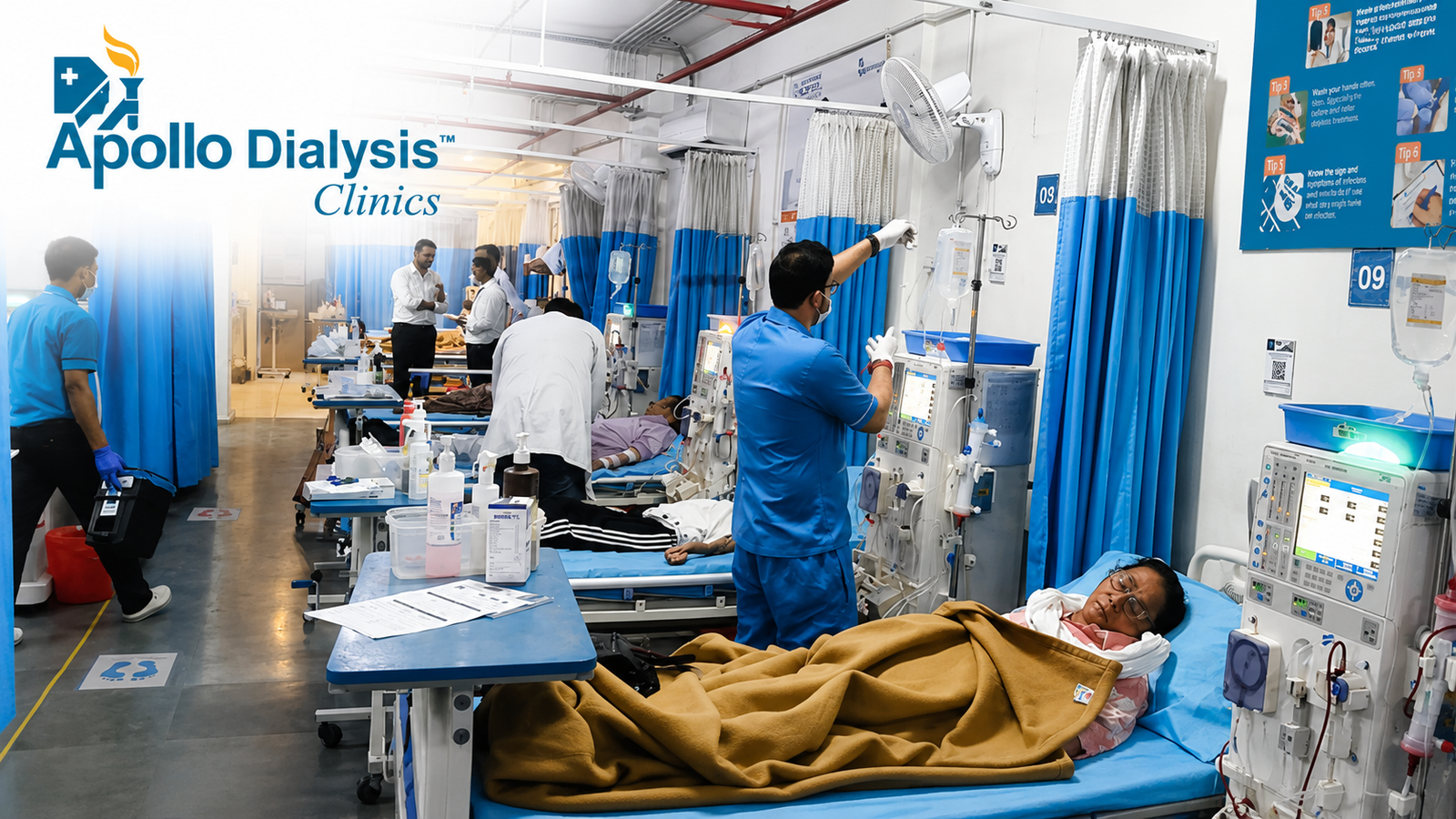
The Government of Assam, in partnership with Apollo Dialysis Clinics, has continued to strengthen access to free dialysis services in Cachar district under the Pradhan Mantri National Dialysis Programme (PMNDP), offering advanced kidney care to eligible patients through centres at Silchar Medical College & Hospital and Katigorah Model Hospital. Operating under the Public-Private Partnership (PPP) model, the initiative aims to provide uninterrupted treatment for chronic kidney disease patients closer to their homes while reducing travel requirements and treatment costs.
According to official figures, more than 3,300 kidney patients in the Cachar region had received treatment through the two centres as of June 2026, with over 75,000 free dialysis sessions conducted. The facilities offer hospital-grade renal care, including hemodialysis and peritoneal dialysis support, at no cost to eligible beneficiaries.
Apollo Dialysis Clinics Chief Operating Officer M. Sudhakar said the centres are supported by advanced infrastructure, experienced nephrologists and trained technicians, with a focus on extending quality kidney care to rural and remote communities. He said the partnership with the Assam government is helping improve accessibility to life-saving renal treatment across the region.
Statewide, Apollo Dialysis Clinics currently operates 72 dialysis centres in partnership with the Government of Assam, while nine additional clinics are ready for launch. The network has served more than 20,000 patients and delivered over 12 lakh free dialysis sessions across the state.
The continued expansion of free dialysis services is expected to strengthen Silchar’s position as a key healthcare hub in southern Assam. Improved access to specialised renal care is likely to reduce patient referrals outside the region, support allied healthcare services, generate employment for medical professionals and technicians, and boost demand for healthcare infrastructure, reinforcing the city’s growing importance in the Barak Valley’s medical ecosystem.