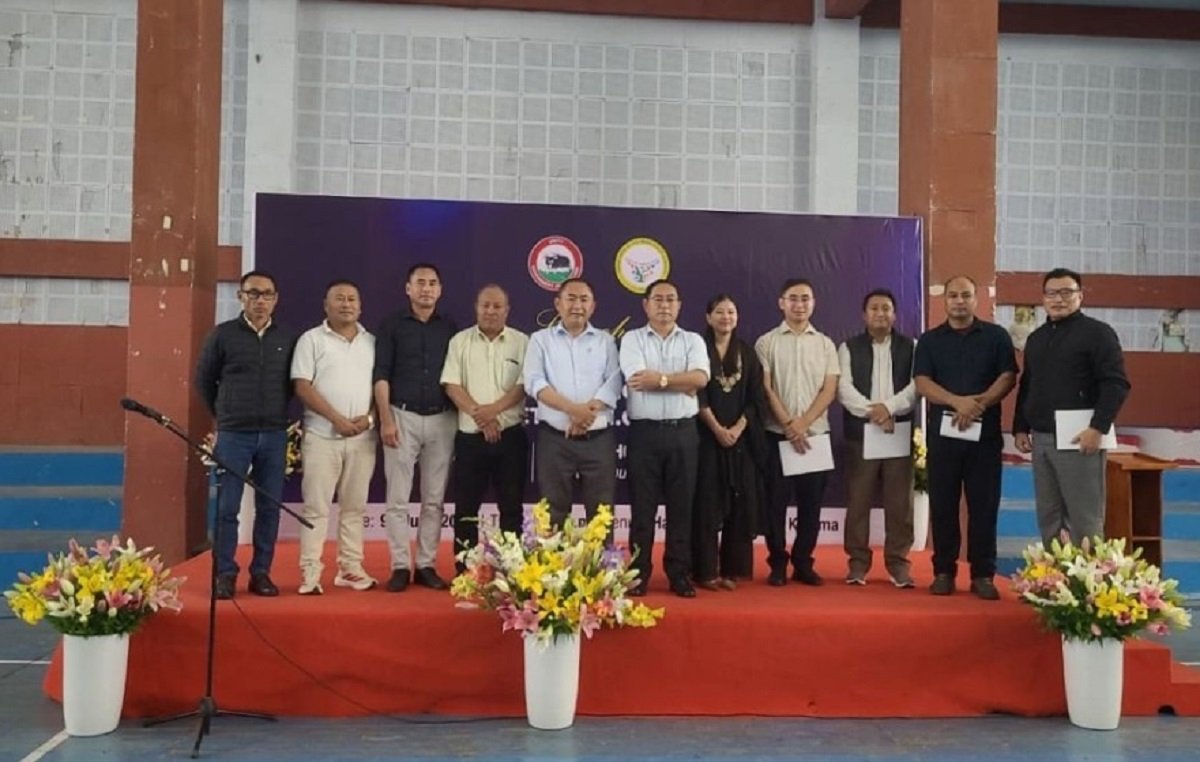
In a move aimed at supporting the overall development of young sportspersons, the Nagaland Department of Youth Resources and Sports (YRS) has launched two new initiatives focused on mentorship, career guidance and livelihood opportunities for athletes. The Mentorship Programme for Holistic Development of Student Athletes and the Skill-Based Economic Sustenance Programme for Athletes were inaugurated on Tuesday at the Indira Gandhi Stadium in Kohima by Youth Resources and Sports Secretary Anthony Ngullie. The programmes are designed for athletes training at the Indira Gandhi Academy and seek to address the challenges many young sportspersons face in balancing education, personal growth and future career prospects alongside their sporting commitments.
Speaking at the launch, Ngullie said athletes require support beyond coaching and competition. While coaches focus on improving sporting performance, mentors can help athletes navigate educational, personal and career-related challenges, he said. Under the mentorship programme, 11 officers from the department, including the secretary, will serve as mentors for around 140 athletes. Each mentor will guide 12 to 13 athletes through regular interactions covering academics, discipline, mental and physical well-being, life skills and career planning. Officials said the mentorship initiative will continue until March next year and is intended to provide a structured support system through personalised guidance and counselling. The programme is being seen as one of the state’s first organised efforts to combine sports training with career mentorship and long-term life planning.
Alongside the mentorship initiative, the department also launched the Skill-Based Economic Sustenance Programme to help athletes build alternative sources of income and prepare for life after competitive sports. The programme, which is open to athletes aged 15 years and above, will begin on June 11 and continue until October. According to YRS officer Naroenla, participants will receive training in a range of vocational and entrepreneurial skills, including mobile phone repairing, crochet work, pickle making, food processing, baking and confectionery, and floristry. Officials said the objective is to equip athletes with practical skills that can support self-employment, entrepreneurship and financial stability in the future. Each training module will run for one month, consisting of two weeks of expert-led classroom instruction followed by two weeks of practical training and hands-on experience.